

What You Learn in Cosmetology School From Day One to Licensing
What You Can Expect to Learn
- A Broad Beauty Education: Cosmetology training is not limited to haircutting. Students can study coloring, chemical texture services, skin care, manicuring, makeup, hair removal, and other salon services within their program and state scope.
- Safety and Science Matter: Training includes subjects such as anatomy, basic chemistry, sanitation, infection control, product safety, and practical salon calculations. Scientific Concepts account for 35% of the NIC Cosmetology Theory Examination.
- Career Skills Beyond Technique: Students may also learn salon professionalism, client retention, salon operations, job-search preparation, and other skills that support life after graduation.
- Licensing Rules Are Local: Required training hours and examination procedures depend on the state. Neosho Beauty College's Master Cosmetologist program, for example, is a 1,500-hour program designed around Missouri cosmetology training requirements.
Choosing beauty school can feel exciting and uncertain at the same time. You may already imagine yourself creating dramatic color transformations, styling clients for important occasions, or building a loyal book of regulars, while still wondering what you will actually spend your school days learning. Cosmetology education includes much more variety than many beginners expect.
If you are still deciding whether this path fits your plans, reviewing these things to consider before enrolling in cosmetology school can help you think through the commitment before getting started. Here is a closer look at the technical, scientific, safety, and professional subjects that can make up a complete cosmetology education.
What Makes Up a Cosmetology Education?
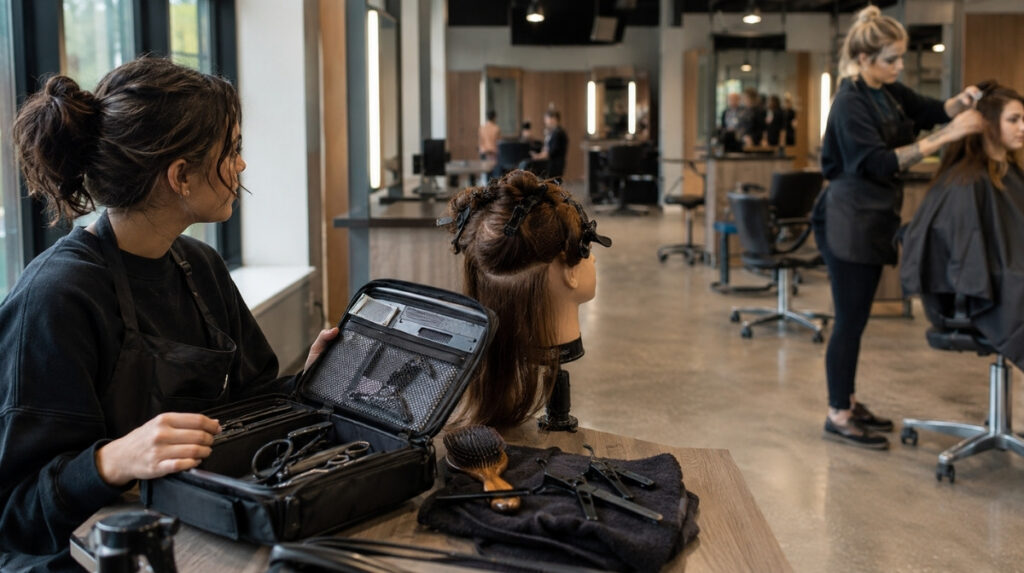
Cosmetology school combines classroom instruction with repeated practical training. The goal is not simply to memorize procedures, but to understand how services work, how to perform them correctly, and how to recognize situations where safety should come first.
Neosho Beauty College describes its Master Cosmetologist program as a 1,500-hour program that includes hair, skin, nails, and salon management. Its published program information lists training in haircutting, coloring, perming, styling, manicures, pedicures, acrylic sets, lash and brow services, facials, waxing, and makeup application, along with professional-development subjects such as salon business, client retention, resume writing, and job-seeking skills.
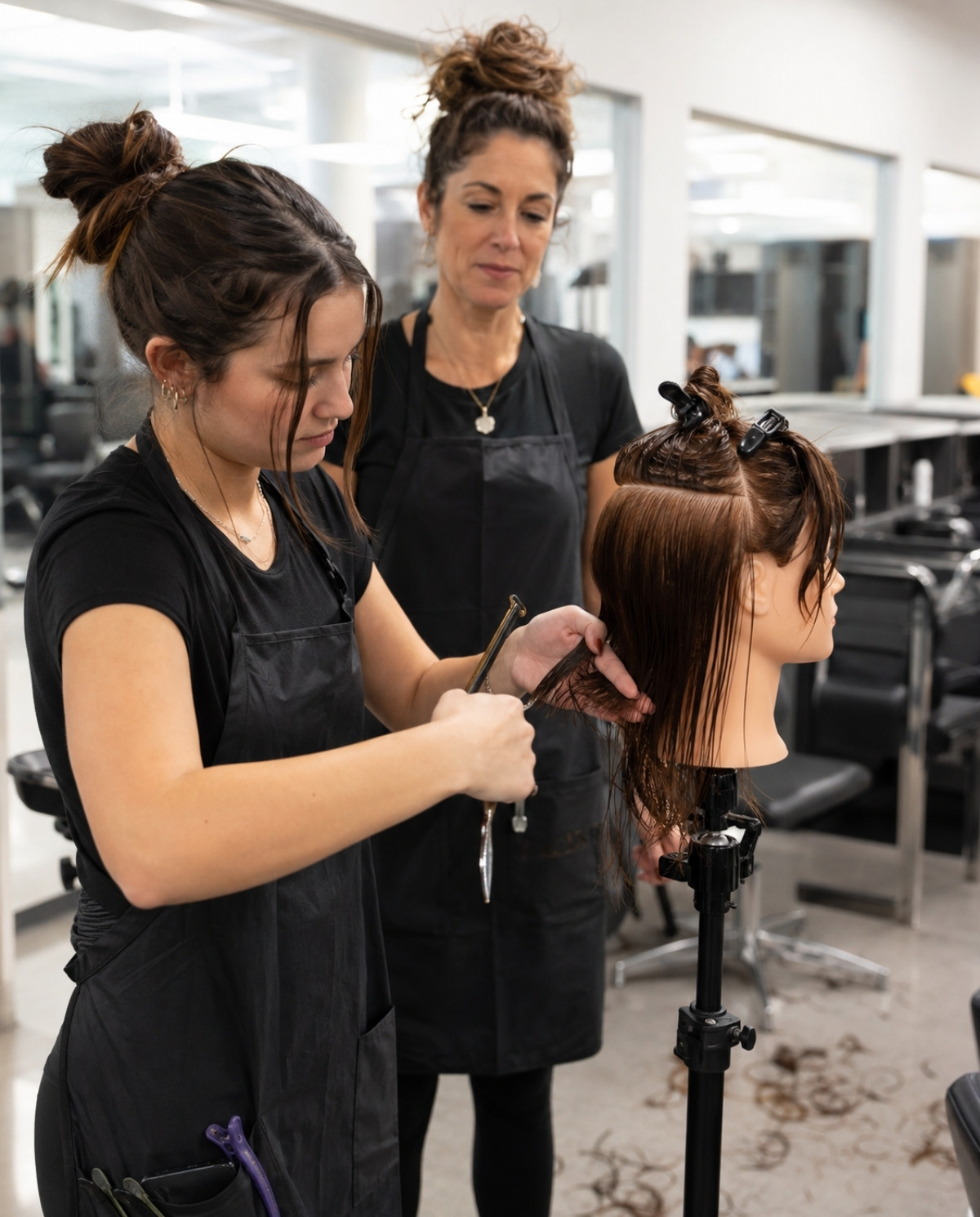
Hair services still represent a major part of cosmetology training. Students develop cutting and styling techniques while learning how texture, density, growth patterns, head shape, elevation, and design choices affect the finished result. The NIC Cosmetology Theory Examination includes haircutting and shaping, wet and thermal styling, natural hair styling, design principles, and procedures for different hair types and textures.
Chemical services are another important part of the curriculum. Students learn about permanent waving, chemical relaxing, coloring, and lightening while studying how these services alter the hair and how product chemistry affects results. Color education also introduces formulation, tone correction, lightening, application methods, and the use of complementary colors to manage unwanted tones. The NIC theory blueprint includes techniques such as foiling, balayage, color formulation, and color correction within its chemical-services content.
Why Science and Salon Math Matter
Cosmetology uses more science than many new students expect. Product chemistry, hair and skin structure, sanitation, and chemical reactions all influence whether a service is effective and safe.
According to the National Interstate Council of State Boards of Cosmetology, Scientific Concepts account for 35% of the NIC Cosmetology Theory Examination. This section covers infection control and safety, anatomy and physiology, hair, scalp, skin and nail conditions, basic chemistry, chemical interactions, chemical reactions, and the pH scale.
That knowledge has direct value during salon services. Students need to understand how contamination can spread, how tools and work areas should be disinfected, when a visible condition may make a service inappropriate, and why manufacturer instructions matter when using chemical products.
Math also appears in practical ways. You may use ratios when preparing products, monitor processing times, work with angles and elevation during cutting, and later use basic calculations when tracking costs, inventory, commissions, or business expenses. These are everyday calculations rather than advanced mathematics, but accuracy matters.
Beauty Skills That Go Past Hair
Cosmetology can be a good fit for students who enjoy several areas of beauty instead of wanting to focus only on hairstyling. Depending on the school and state, training may include nails, skin services, makeup, hair removal, and related salon techniques.
At Neosho Beauty College, the published cosmetology curriculum includes manicures, pedicures, acrylic sets, lash and brow services, facials, waxing, and makeup application in addition to hair services. That gives students the opportunity to build experience across several parts of the beauty industry while completing one broad program.
This variety can also help students discover which services they enjoy most. Someone who starts school expecting to focus on cutting may develop a stronger interest in color, while another student may become particularly interested in nails, makeup, or skin services.
Even so, cosmetology licenses do not give professionals unlimited authority to perform every beauty or aesthetic procedure. Each state establishes a legal scope of practice that defines what services a license holder may perform. Graduates should always follow the rules of the state where they plan to work.
How Skin Care Is Included
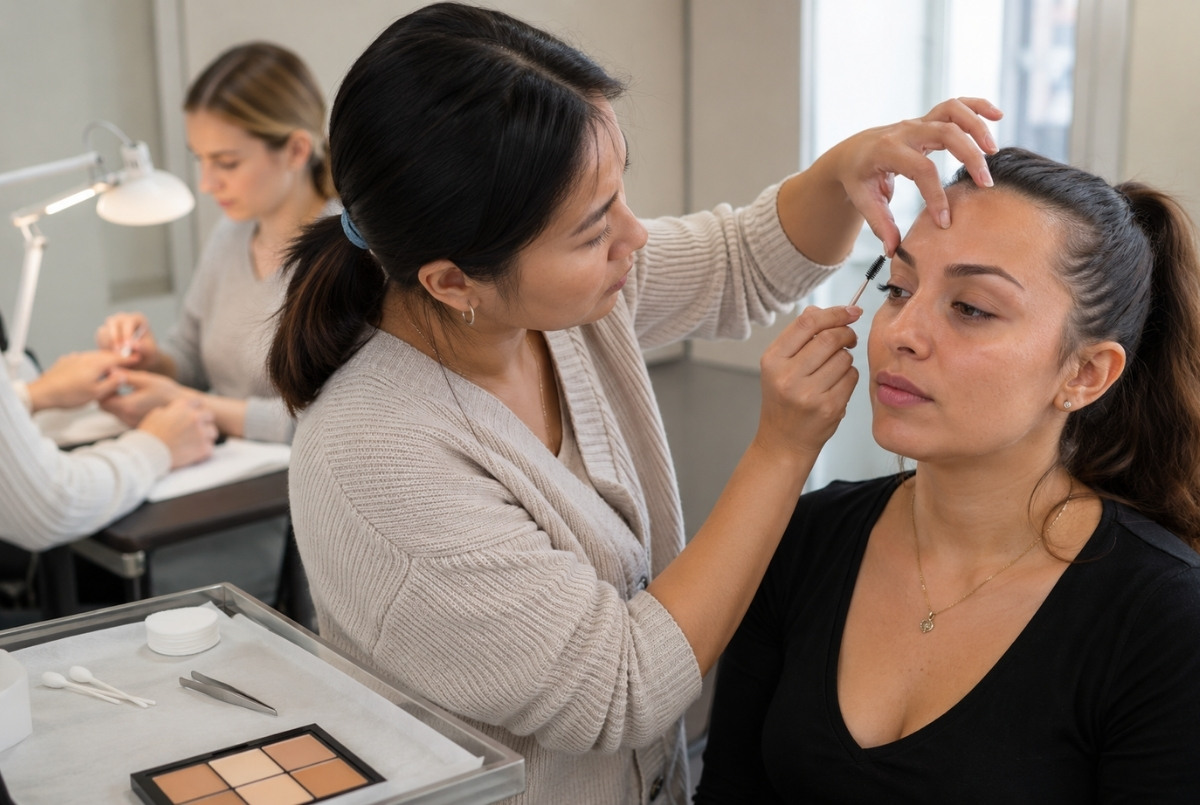
Skin-related cosmetology education is not limited to applying makeup. Students also learn foundational concepts involving skin structure, sanitation, contraindications, product safety, client evaluation, and basic facial services.
The NIC Cosmetology Theory Examination assigns 10% of its content to Skin Care and Services. That section includes client skin evaluation, contraindications, infection-control procedures, facial services, hair removal, makeup application, and the safe use of skin-care equipment.
Neosho Beauty College also lists facials, waxing, makeup application, and lash and brow services among the subjects included in its cosmetology training. These areas give students useful exposure to skin and beauty services while remaining within the boundaries of general cosmetology education.
Advanced esthetic or medical-aesthetic procedures are a different matter. Depending on the state and service involved, treatments using medical devices, lasers, or other advanced technologies may require separate licensing, additional education, medical oversight, or another credential. A cosmetology license should never be assumed to cover every specialized treatment.
Preparing for Clients, Careers, and Salon Life
Technical ability is only part of becoming a working beauty professional. Once you begin serving clients, communication, professionalism, reliability, client retention, scheduling, and salon organization become just as important to your long-term success.
Neosho Beauty College includes salon business, client retention, resume writing, and job-seeking skills in its published cosmetology training. These subjects help students prepare for the transition from school into a salon, independent workspace, or another beauty-industry setting.
Industry data from the U.S. Bureau of Labor Statistics also shows why professional and business knowledge matters. About 84,200 openings for barbers, hairstylists, and cosmetologists are projected each year, on average, from 2024 through 2034. In 2024, 48% of hairdressers, hairstylists, and cosmetologists were self-employed.
Professionals who operate independently may be responsible for keeping records, buying supplies, managing inventory, advertising their services, and handling other business duties. Strong technical skills help you deliver the service, while professional and business skills help you build a sustainable career around that work.
A cosmetology background can support several different careers you can pursue with a cosmetology license, depending on your training, experience, interests, and the services permitted by your state license.
Learning for Today’s Salon Environment
Beauty trends change quickly, but strong cosmetology programs focus on principles that remain useful even when particular styles come and go. Understanding shape, texture, chemistry, design, and client safety makes it easier to adapt your technique instead of depending on one trend.
Hair texture is an important example. The NIC theory blueprint includes procedures for different hair types and textures as well as natural hair styling, including braiding. Students also study hair and scalp conditions so they can identify factors that may affect whether or how a service should be performed.
Chemical services require similar judgment. Permanent waving, relaxing, coloring, and lightening can change the structure or condition of the hair. Students therefore need to understand product chemistry, follow manufacturer directions, evaluate hair condition, and avoid unnecessary chemical damage.
Product regulation has also become more important across the cosmetics industry. The FDA's Modernization of Cosmetics Regulation Act of 2022, or MoCRA, expanded federal oversight of cosmetic products through requirements involving matters such as serious adverse-event reporting, facility registration, product listing, and safety substantiation. Many of these obligations apply to manufacturers, processors, and responsible persons behind cosmetic products rather than directly to individual cosmetologists, but product safety remains relevant to professionals who use cosmetics every day.
Workplace safety is another consideration. The Occupational Safety and Health Administration warns that certain hair-smoothing products may contain or release formaldehyde. Salons and beauty schools using products that contain or can release formaldehyde may be subject to applicable OSHA formaldehyde and hazard-communication requirements, which is one reason product knowledge and safety procedures are important parts of professional training.
How Training Connects to State Licensing
There is no single national cosmetology training requirement. States determine their own education hours, curriculum rules, examinations, and licensing procedures, so students should always verify the requirements where they intend to work.
For example, Georgia's current State Board of Cosmetology and Barbers rules require a complete cosmetology school course to total 1,500 hours. The curriculum begins with 250 hours of Level 1 training, which students must complete before performing clinical services on clients.
The Arkansas Department of Health cosmetology rules also require at least 1,500 hours of cosmetology training. Arkansas's 2026 Candidate Information Bulletin identifies the NIC Cosmetology Theory Examination as the written cosmetology examination and also includes an Arkansas State Law examination.
Neosho Beauty College's Master Cosmetologist program likewise totals 1,500 hours. Because Neosho is located in Missouri, students should follow Missouri's current licensing requirements when preparing for licensure rather than assuming that another state's examination process applies.
After completing school and the licensing requirements that apply in your state, learning what comes next during life after cosmetology school can help you plan the move from student training into your first professional role.
Frequently Asked Questions
- How long will cosmetology school take? Program length depends on required training hours, attendance, and whether you study full time or part time. Neosho Beauty College's Master Cosmetologist program requires 1,500 hours, while the calendar time needed to complete those hours depends on the student's schedule and attendance.
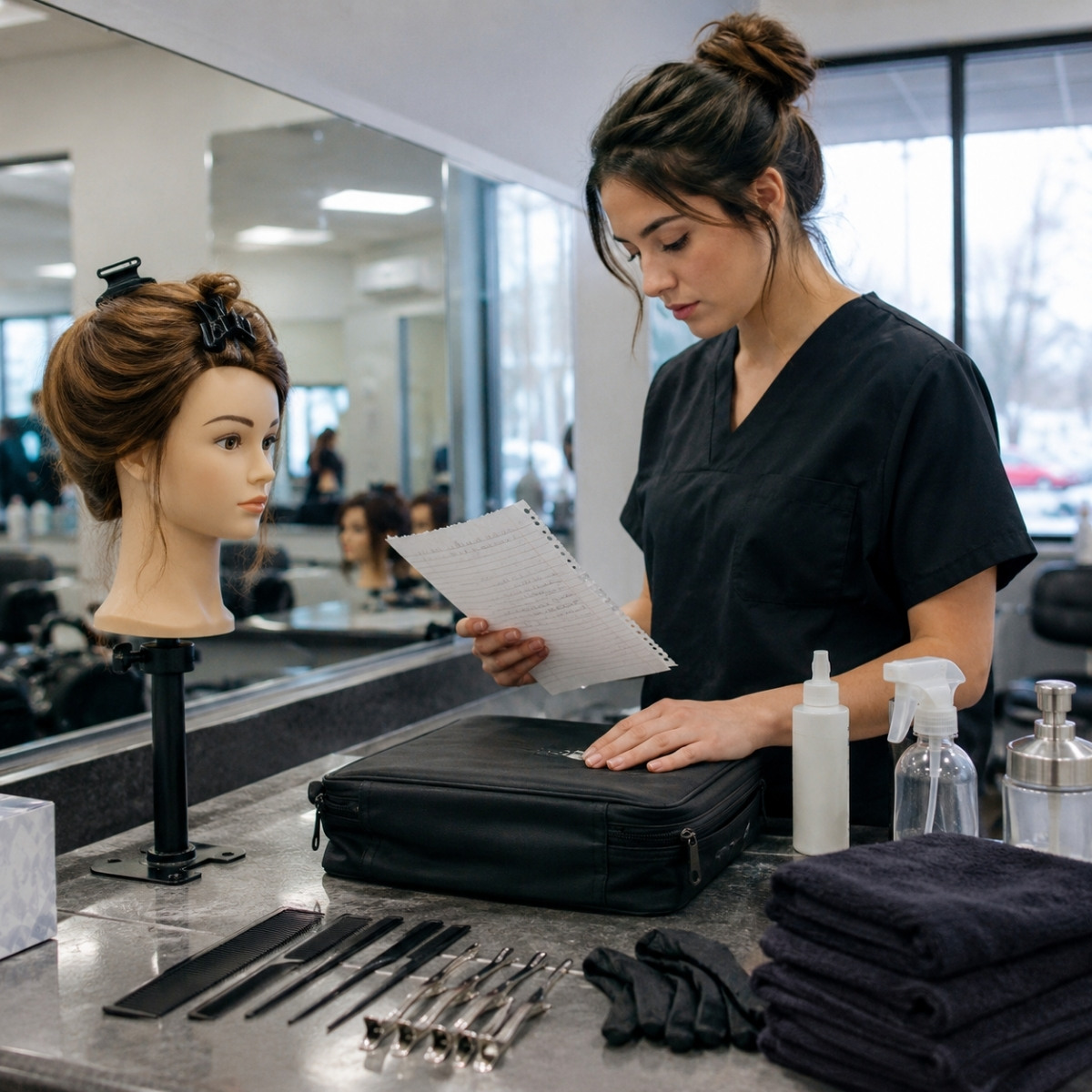
- Should I purchase professional tools before classes begin? Check with the school before buying anything expensive. Student-kit policies differ between programs, and the school can tell you which tools, supplies, mannequins, or equipment are included and which items students must provide themselves.
- Is cosmetology difficult if I have no previous beauty experience? Beginners are expected to learn gradually. Training generally starts with foundational theory and basic techniques before students move into more advanced practical work. Progress comes from repetition, instructor guidance, study, and hands-on practice.
- Can I focus on one specialty after graduation? Yes. Many licensed professionals eventually concentrate on services such as hair color, textured hair, bridal styling, makeup, nails, or another area permitted by their state license. Specialized medical or laser-based services may require separate credentials. Georgia, for example, has distinct laser practitioner licensing requirements for individuals who want to provide regulated laser or IPL services.
Explore Cosmetology Training at Neosho Beauty College
A complete cosmetology education brings together creative technique, science, sanitation, client care, and professional development. Neosho Beauty College's 1,500-hour Master Cosmetologist program introduces students to hair, nails, skin services, salon management, client retention, and career-preparation skills designed to help them build a foundation for professional work.
If you are interested in learning more about the program, admissions process, or upcoming class opportunities, visit the school's Enrollment page. You can also contact Neosho Beauty College directly to ask about schedules, student kits, enrollment requirements, or visiting the campus.
One thought on “What You Learn in Cosmetology School From Day One to Licensing”