

What Is a Beauty Instructor? Understanding the Meaning, Duties, and Salary
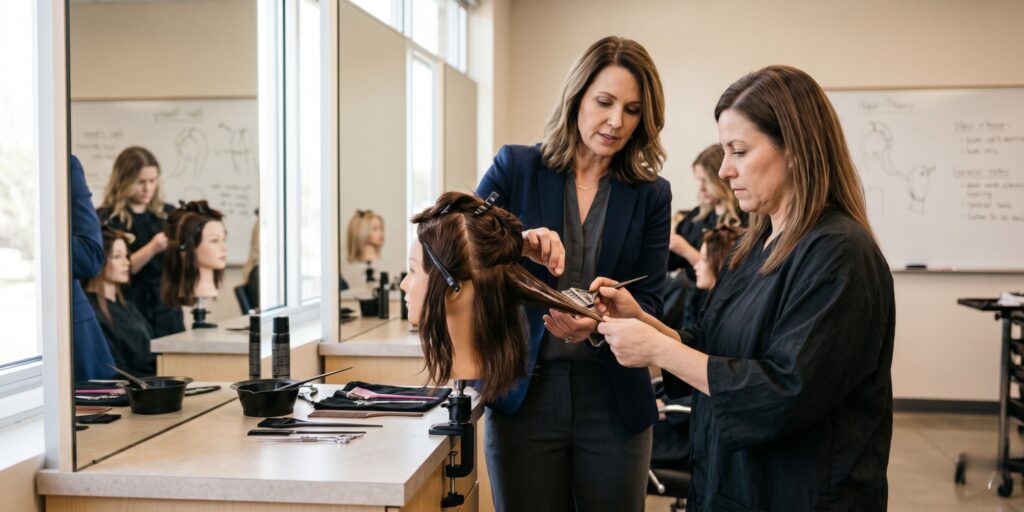
I remember the first time I realized I wanted to be more than just a stylist. I was watching a new assistant struggle with a basic highlight application, and instead of feeling annoyed, I felt this huge spark of excitement. I wanted to help them get it right. If you have been in the beauty industry for a few years, you might be feeling that same pull. You love what you do, but you are ready to trade the long days behind the chair for a role where you can actually shape the future of our craft.
Transitioning into education is a major step toward professional growth. It allows you to use your expertise to lead others while finding a bit more balance in your daily routine. Let's take a look at what the role of a beauty instructor really involves and how you can move into this rewarding career path.
Key Takeaways
- Market Growth: The global beauty and cosmetology school market is on track to reach $9.61 billion by 2026, which means beauty education remains a sizable market.
- Income Stability: According to the U.S. Bureau of Labor Statistics, postsecondary technical education teachers—a category that includes beauty instructors—earn a median salary of about $61,490.
- New Industry Standards: Modern education is shifting. It is no longer just about technical skills; it is about product science, client communication, and the art of teaching.
- Long-Term Career Health: Moving into education can reduce the physical strain on your body while establishing you as a respected authority in the beauty world.
The Identity of a Modern Beauty Instructor
When I think about the meaning of a beauty educator, I don't just see someone who demonstrates a haircut. I see a mentor who translates years of physical intuition into simple, actionable steps for a student. Whether you call yourself a cosmetology instructor, a hair and beauty educator, or a beauty school instructor, your primary job is to be the bridge between a beginner's curiosity and a professional's skill.
The industry is changing fast. According to trends from HOTT Beauty Lounge, we are seeing a huge move toward "Clean-ical" beauty. This means our students need to understand ingredients, skin barrier health, and clinical-style results better than ever before. You aren't just teaching a facial; you are explaining the lipid barrier and how products interact with the skin's surface.
The Human Element
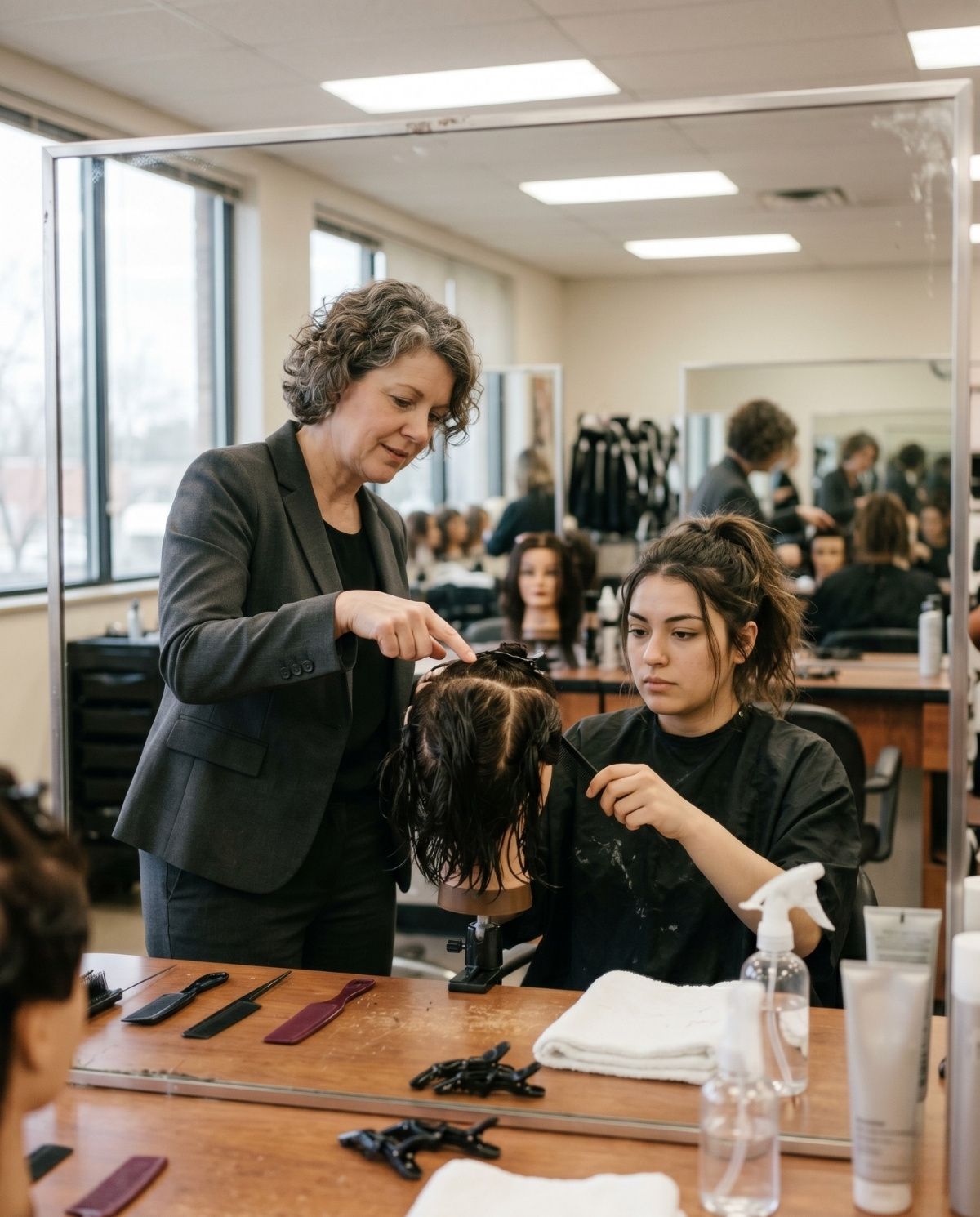
Even with all the new technology out there, Mintel’s 2026 predictions suggest a "Human Touch Revolution." People want authentic, emotionally real beauty experiences. As an instructor, I have to teach the things an algorithm can't—like how to handle a tough client consultation or the intuition needed for a complex color correction.
What Does a Beauty Educator Actually Do?
The daily life of a beauty educator is a mix of structure and hands-on coaching. You spend part of your time in a classroom setting and the rest of your time on the clinic floor supervising students as they work on real people.
One of the most important parts of the job is ensuring students stay within their scope of practice. This refers to the legal limits of what they are allowed to do. For example, Missouri law defines different beauty license areas, including cosmetology, manicuring, and esthetics, and outlines the types of services connected to each field. As an instructor, you help students understand those boundaries so they practice safely, legally, and professionally.
Your typical daily tasks might include:
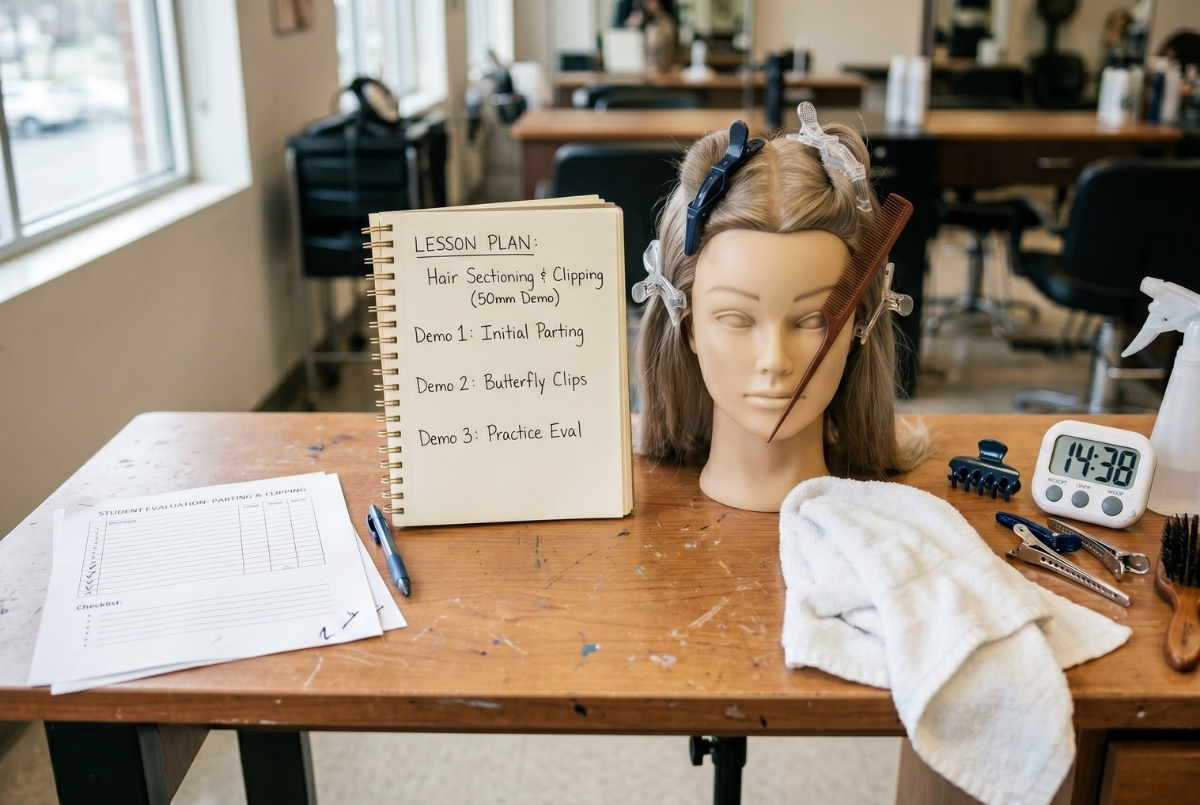
- Building lesson plans that follow state requirements.
- Showing students how to perform techniques safely and effectively.
- Grading written tests and practical evaluations.
- Tracking the hours students need for their licensing.
- Mentoring students on professional "soft skills" and business building.
- Managing the safety and sanitation of the student salon floor.
Understanding the Salary and Potential
If you are tired of the "up and down" nature of salon commissions, the stability of a beauty school instructor salary can be very appealing. School-based positions may offer a more consistent paycheck, and some employers may include benefits like health insurance or retirement plans, depending on the school and role.
When looking at how much you can make, it helps to use reliable benchmarks. O*NET groups beauty instructors under postsecondary technical education teachers. The U.S. Bureau of Labor Statistics notes a median salary of $61,490 for this group.
Some private data from Franklin University suggests the median could be as high as $83,637 depending on the region and the type of school. The top earners in technical education can even make over $101,510. Ultimately, your income will depend on your experience and whether you work for a private academy, a community college, or a specific beauty brand.
The market itself is very healthy. Research from Business Research Insights shows the global school market is growing toward that $9.61 billion mark. This tells me that schools need educators who can provide high-quality training.
How to Become a Licensed Beauty Instructor
You can't jump into a teaching role just because you are a talented stylist. You have to earn a specific beauty instructor license. Usually, this means building on top of the license you already have, like cosmetology, nails, or esthetics.
The path generally follows these steps:
- Hold an active license: You must be currently licensed in the field you want to teach.
- Meet your state requirements: Requirements vary by state, so it is important to check the rules for where you plan to work. In Missouri, instructor trainees must already hold the relevant Missouri license before entering instructor training.
- Instructor training: You have to enroll in a state-approved beauty instructor training program. These programs focus on pedagogy—which is just a fancy word for the science of teaching.
- Complete your hours: Every state has different requirements. For instance, Missouri law requires 600 hours of instructor training for instructor trainees. Neosho Beauty College also lists its Instructor Training program as a 600-hour program.
- Pass the exams: You will take the required state board exam that tests your technical knowledge, safety knowledge, state-law understanding, and ability to teach a class.
Even in nearby states, these rules are becoming more specific. For example, South Carolina Bill 4752 highlights the need for dedicated "methods of teaching" courses. The goal is to ensure you are a great teacher, not just a great technician.
Flexibility and Modern Training
I often get asked if it is possible to get a cosmetology instructor license online. The answer is usually a mix. While you might be able to finish some theory work or lesson planning through an online beauty educator course, you almost always have to complete your supervised practice teaching in person.
Choosing the right school is vital. You want a program that respects your time but also gives you the confidence to lead a classroom on your very first day.
Build Your Legacy at Neosho Beauty College
Moving into education is a way to turn your hard-earned skills into a lasting legacy. It is about stepping away from the daily physical grind and stepping into your potential as a leader.
At Neosho Beauty College, I believe in providing the mentorship and professional credibility you need to make this transition smoothly. Our Instructor Training program is designed for licensed cosmetologists, manicurists, and estheticians who are ready to teach the next generation. The program includes lesson planning, instruction delivery methods, teaching methodologies, classroom management, business management, state board exam preparation, and curriculum creation, helping future educators build the foundation they need to lead with confidence.
If you are ready to see what the next chapter of your career looks like, you can find out more through Admissions. I also encourage you to fill out the contact form we have at the end of this article so we can chat about your goals and how we can help you reach them.
FAQ: Common Questions for Future Educators
How long does it take to become a cosmetology instructor?
Most people finish their training in 6 to 12 months, depending on if they are attending full-time or part-time. Your specific hours will depend on your state and your specialty. In Missouri, instructor training is generally a 600-hour program.
What is the difference between an instructor and an educator?
Usually, an "instructor" works within a licensed school. An "educator" might work for a product brand, travel to different salons, or offer advanced training to existing professionals.
Can I become a beauty educator online for free?
There are free workshops out there, but to get a state license, you have to complete an approved program and pass your board exams.
What can I do with a beauty instructor license?
You could teach at a school, become a school director, lead curriculum development for a brand, or even work as a state board examiner.