

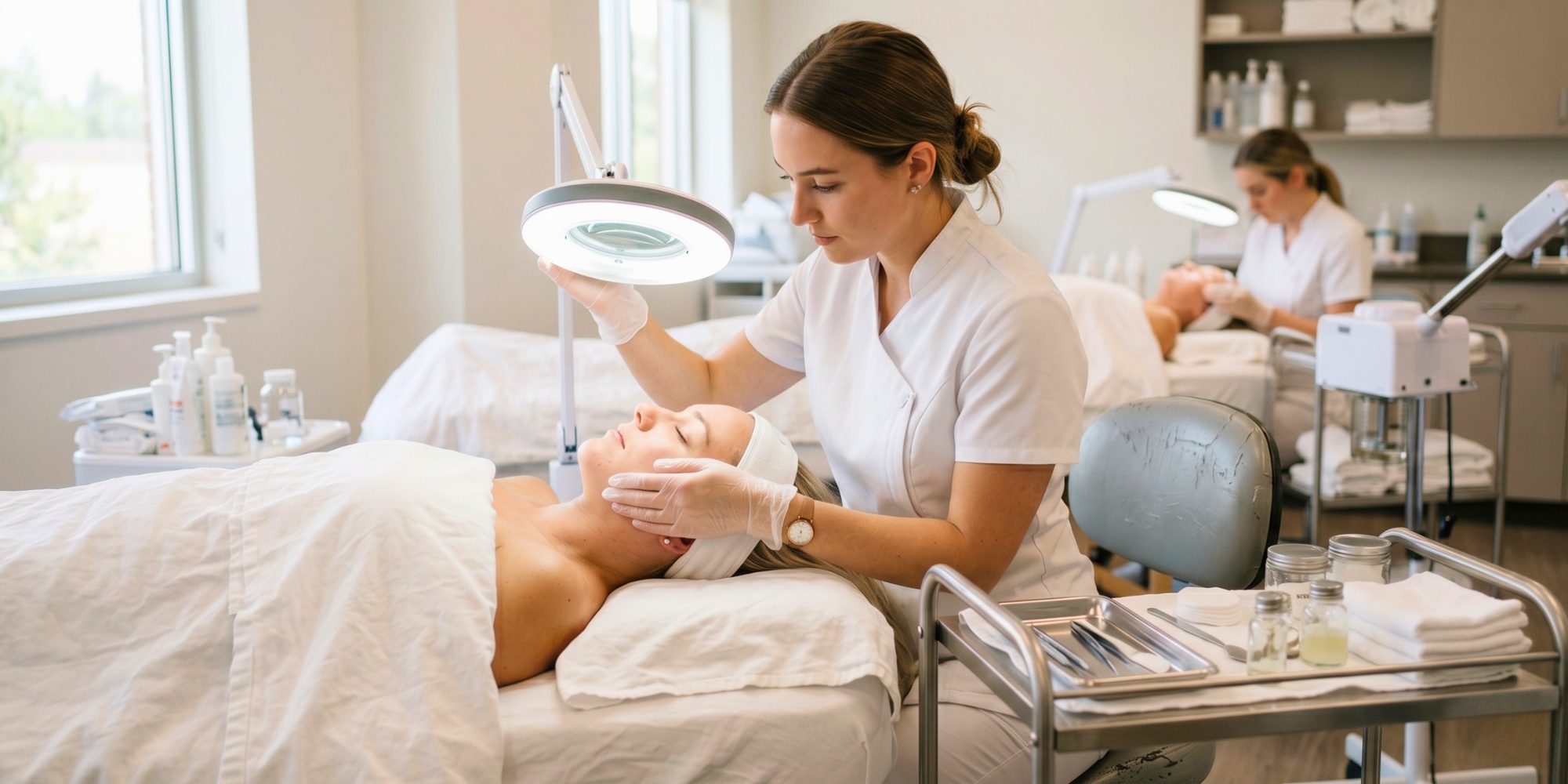
Selecting a career in the beauty industry involves balancing a passion for skincare with the realities of professional training and licensing. Moving from a casual interest in products to a true focus on skin health requires an understanding of biology, chemistry, and the standards that govern the field.
If you want to know how to become an esthetician, the process involves more than an interest in facials and skincare products. This guide explains the education for an esthetician, the current requirements for an esthetician license, and the typical esthetician school cost.
Key Takeaways for Future Professionals
- Fast Training: Most students complete their training for an esthetician in 4 to 12 months.
- Job Outlook: The Bureau of Labor Statistics expects 7% growth in this field through 2034.
- Salary Information: Average pay is around $45,374, though a Master Esthetician can earn over $66,900.
- Modern Rules: The Modernization of Cosmetics Regulation Act (MoCRA) has introduced stricter standards for professional accountability.
The Evolution of Modern Skin Health
Professional beauty has evolved into what Mintel analysts describe as Metabolic Beauty. Clients now expect their providers to understand how internal wellness can affect the skin’s appearance. The scope of professional practice focuses heavily on the lipid barrier. This natural shield of oils and fats helps maintain moisture and protect the skin from external irritants.
Professional exfoliation methods and advanced skincare technology are used to support skin renewal. Science-backed results are now more important than passing beauty trends. Modern clients are looking for bio-intelligent actives that respond to their skin’s condition. Enrolling in esthetician programs that focus on both theory and practical skin science can provide a clear advantage in today’s market.
The Academic Path to Licensing
Meeting basic requirements is the first step toward a career in skin health. State requirements vary, but many states require students to be at least 16 or 17 years old, while individual schools may set higher minimum ages for admission. A high school diploma is commonly expected, but you can be an esthetician with a GED if you do not have a diploma. Most state boards accept these equivalency credentials.
The process for how to become an esthetician after high school follows these steps:
- Research accredited schools with esthetician programs.
- Complete the required training to be an esthetician.
- Pass the official state board examinations.
- Apply for your professional license.
In-Person Training vs. Online Classes
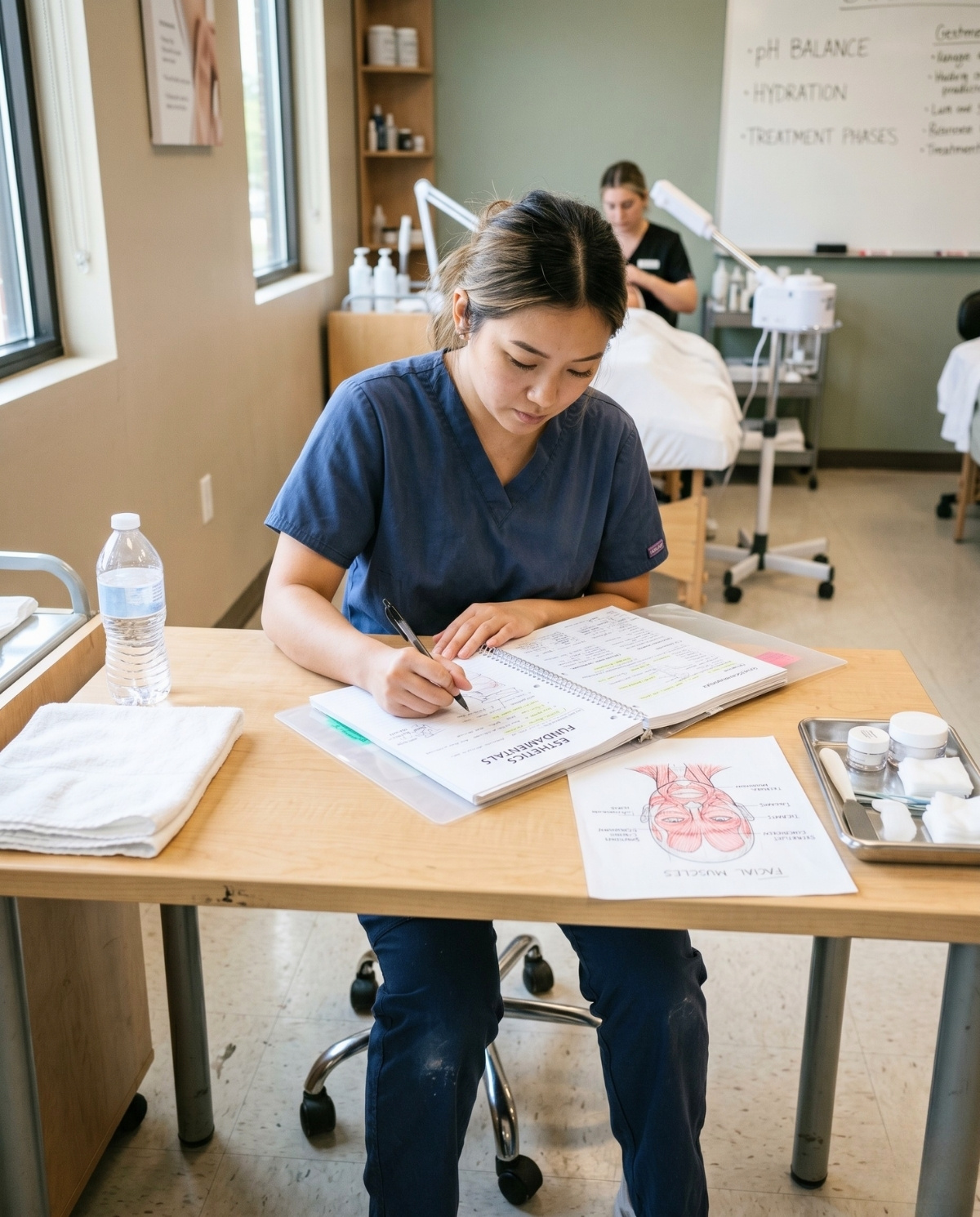
The quickest way to become an esthetician may seem to involve an online esthetician course. Students must be realistic about these options. While you can take online classes for an esthetician to learn theory, anatomy, and related subjects, hands-on clinical work is essential. Safely performing a chemical peel or extraction cannot be mastered through a screen alone.
Licensing boards usually require a specific number of hands-on hours in a supervised student clinic. If you find a program claiming you can finish esthetician school online without any in-person hours, the school is likely not accredited. This would prevent you from obtaining a license for an esthetician and could turn a quick path into a costly mistake.
How Long is School for an Esthetician?
The total time required for training depends on the regulations in your specific state. While the Bureau of Labor Statistics provides general data, hour requirements are set locally. In Missouri, students are required to complete 750 hours of documented training.
The timeline for how long it takes for esthetician school typically looks like this:
- Full-time schedules: Completion usually occurs in about 6 months.
- Part-time schedules: These programs often take 9 to 12 months to finish.
States like Georgia require 1,000 hours, while others have different standards. This accelerated schedule allows for a rapid transition into a new career. You spend more time in a clinical setting and less time in a traditional classroom to build the confidence needed for a salon environment.
Esthetician School Cost and Financial Planning
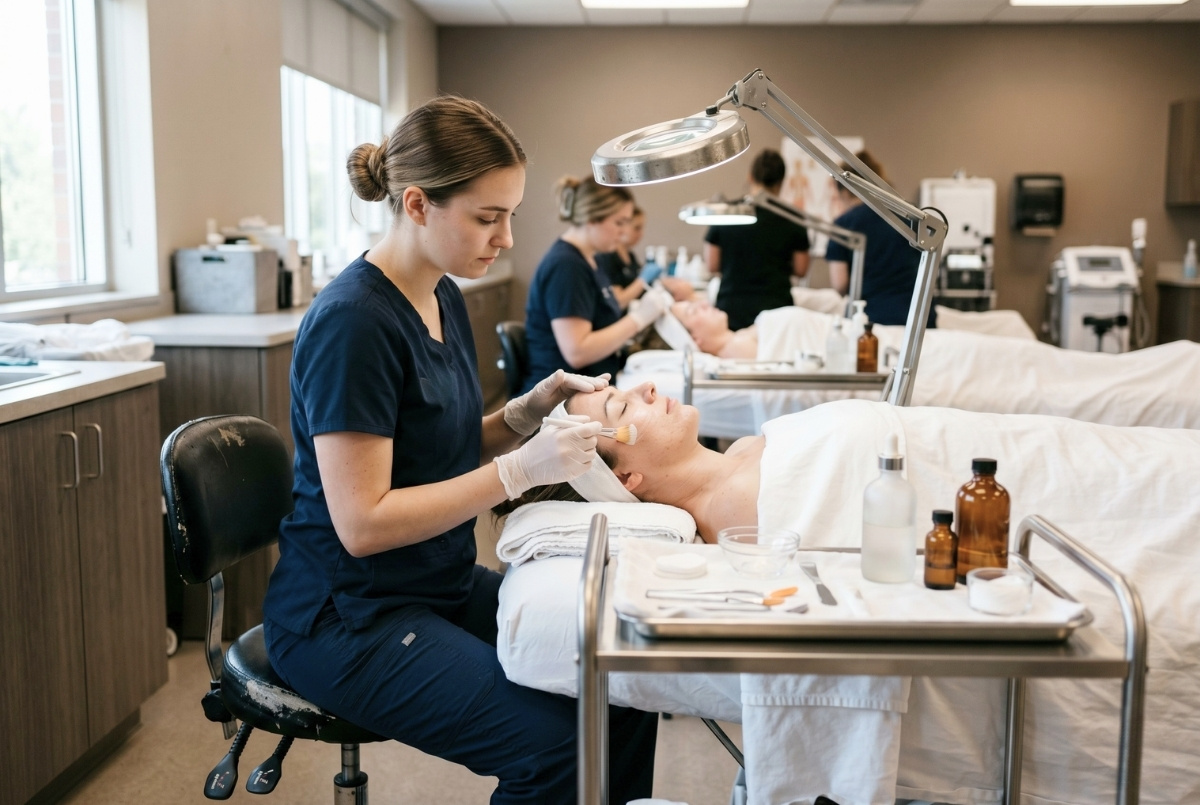
Tuition is an investment in your career. You can expect the price for esthetician school to range from $3,000 at a community college with an esthetician program to over $10,000 at specialized private institutions. Managing the cost of becoming an esthetician is possible through several financial aid options.
- FAFSA for esthetician school: Federal student aid is available if your chosen school participates in Title IV programs.
- Grants for esthetician school: Some institutions offer grant money that does not require repayment.
- Military Benefits: The VA pays for esthetician school at many qualifying locations for veterans and their families.
Remember to account for kit fees when calculating the total cost. These kits include the professional tools and products you will use during training and may also support your early career.
Requirements for an Esthetician License
Finishing your esthetician program leads to the final step of state recognition. The state board confirms your skills through official testing. Many states require a written exam, and some also require a practical exam.
The licensing process typically includes:
- Theory Exam: A written test covering skin biology, state laws, and sanitation protocols.
- Practical Exam: In states that require it, a hands-on demonstration of your technique on a model or mannequin.
While California has simplified its process by removing the practical portion, Missouri continues to maintain rigorous standards to help ensure safety. The cost to get an esthetician license usually falls between $100 and $250 for application and testing fees.
Career Opportunities After Graduation
The question of what you can do with an esthetician license has many professional answers. Common work environments include:
- Medical Spas: Assisting with advanced treatments like microneedling in professional clinical settings.
- Resort and Luxury Spas: Providing high-end services in hospitality-focused environments.
- Self-Employment: Operating a private business and specializing in niche services.
Data from ZipRecruiter in 2026 shows an average salary for an esthetician of $45,374. Specializing in advanced services as a Master Esthetician can raise that average to over $66,900. Building a loyal client base is one of the most effective ways to grow your esthetician yearly salary.

Building Your Professional Legacy
Success in the beauty industry depends on receiving the right training from the start. We focus on developing graduates who are prepared for the professional world. Our educational approach is designed to help students build practical knowledge, hands-on confidence, and familiarity with the standards expected in today’s beauty industry.
Our mission is to help students turn their interests into a reliable career path. You can find more information about starting your journey in Enrollment. We provide the support and environment needed to master your craft and enter the industry with confidence.
If you have questions about our upcoming schedules or how the process works, please fill out the contact form at the bottom of this page. We look forward to helping you take the first step toward your new career in skin health.
Frequently Asked Questions
Is it hard to get a job as an esthetician?
The demand for skin health experts remains strong. Employers prioritize graduates who demonstrate hands-on skill and a clear understanding of modern safety regulations.
Can you be an esthetician without going to school?
No. You must complete a set number of educational hours at an approved school before you are eligible for the state licensing exam.
Do you need a degree to be an esthetician?
A college degree is not a requirement. You only need a high school diploma or a GED and the successful completion of an approved esthetician course.