
I often spend time chatting with people who are looking to change their career path, and the conversation usually shifts toward the actual value of a specialized education. Choosing to enter the skincare field in 2026 is a move that balances personal creativity with a very stable industry. This sector now focuses heavily on wellness and long-term skin quality rather than just quick fixes. I believe that success in this niche comes down to how well a professional can navigate client safety and the technical science behind the products. If you are starting to map out your own journey, looking over a complete guide to esthetician school and licensing is a great way to understand the initial investment and the training required to get your foot in the door.
Key Takeaways
- Market Expansion: Data from the U.S. Bureau of Labor Statistics shows that jobs for skincare specialists should grow by 7% through 2034, which is significantly faster than most other fields.
- Workplace Variety: You can find jobs with an esthetician license in places ranging from traditional spas and retail stores to medical offices and even luxury travel settings.
- Earning Potential: The BLS reported a median wage of $19.98 per hour in 2024. Professionals in physician offices typically saw a higher median of $23.40 per hour. While some experts mention an upper-tier esthetician salary reaching $70,000 to $100,000, those figures usually represent business owners or highly specialized veterans.
- Going Solo: Self-employment is a major part of this industry. However, anyone wanting to run an esthetician business from home needs to follow strict local zoning, sanitation, and state board rules.
- Career Growth: There are clear paths for RNs or cosmetologists to add aesthetic training to their resumes, provided they stay within the legal limits of their specific state licenses.
The Scope of Your Work: What to Expect Daily
I think it is vital to understand the legal boundaries of your profession before you start looking for jobs after esthetician school. Your scope of practice is the set of rules that tells you exactly what you can and cannot do. A modern professional in this field is much more than a typical beautician. You are a trained expert who focuses on skin analysis, chemical safety, and helping clients maintain their lipid barrier.
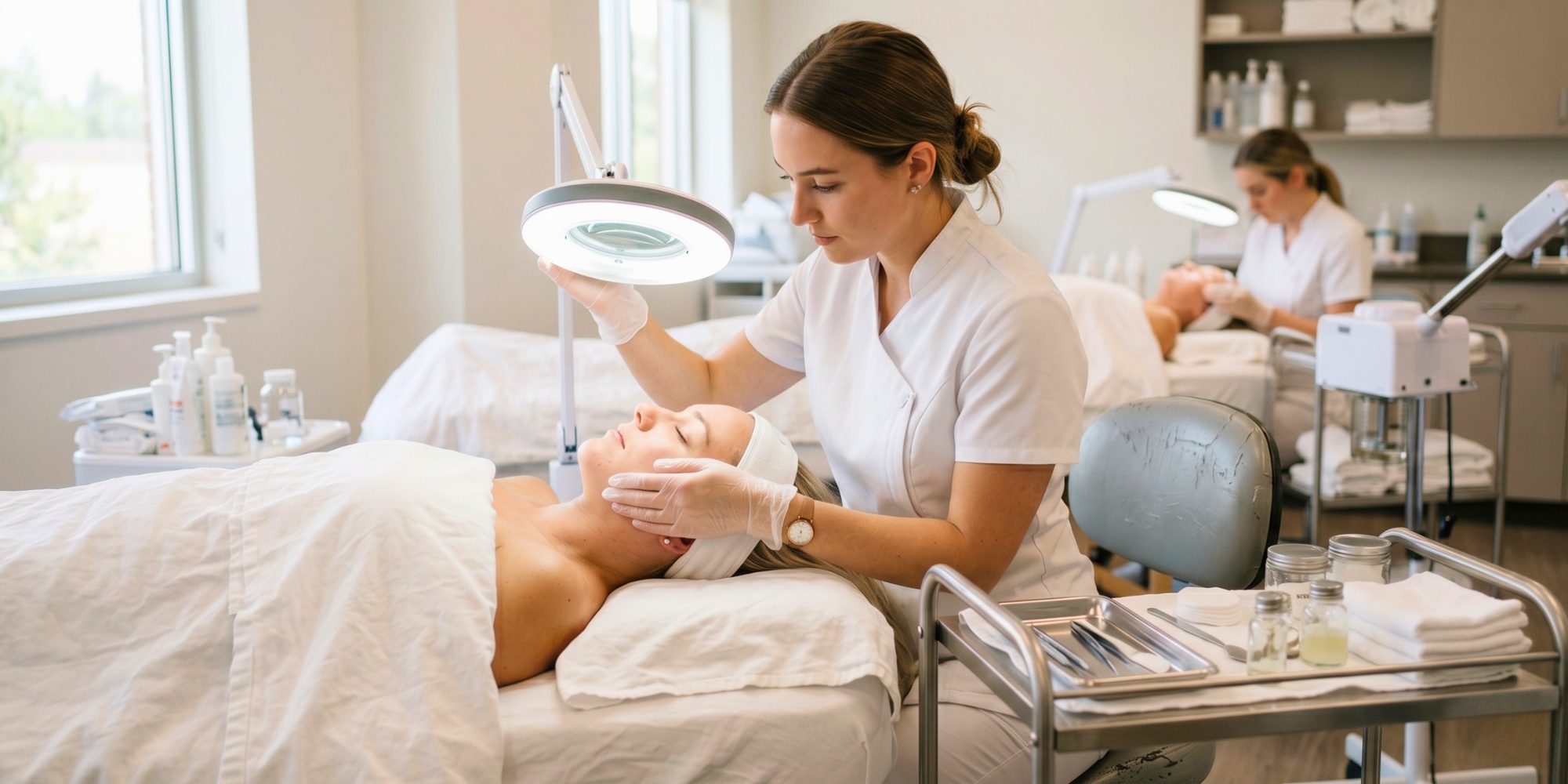
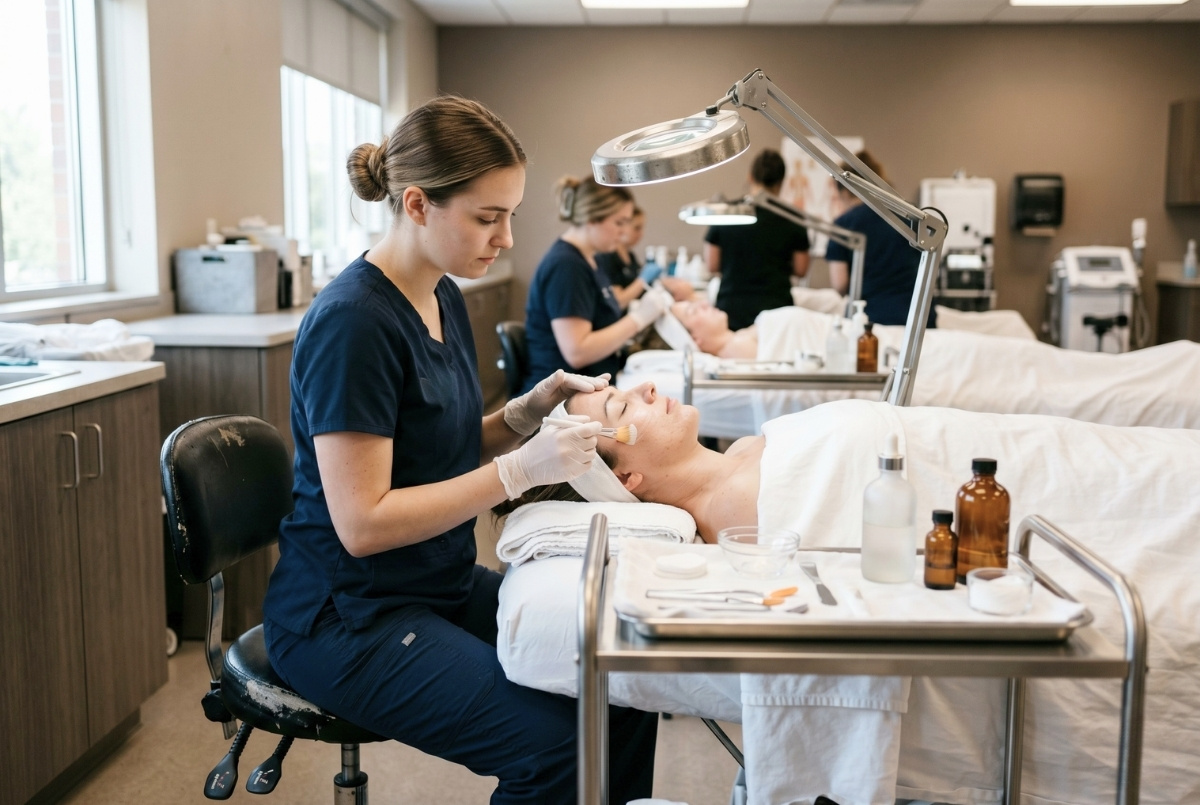
The BLS describes skincare specialists as individuals who provide facials and full-body treatments to improve a client’s appearance. Your daily duties might include deep cleansing, performing professional exfoliation, and identifying when a client needs to be referred to a dermatologist.
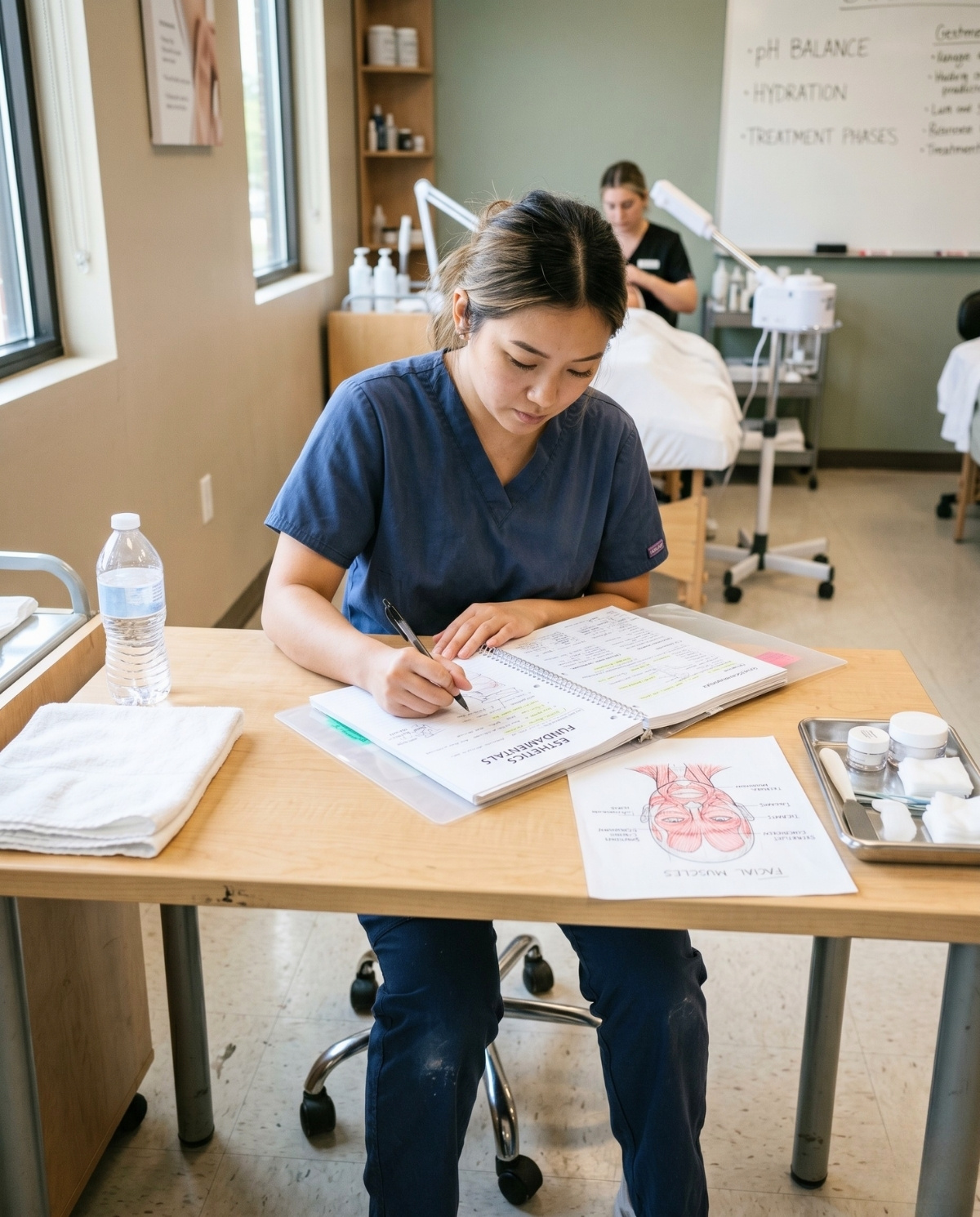
In Missouri, these rules are very specific. Missouri state law defines esthetics as using cosmetic preparations, antiseptics, tonics, lotions, or creams to massage, cleanse, stimulate, manipulate, exercise, beautify, or perform similar work on the skin. It also includes certain hair-removal, brow, and lash-related services. That means your training can help prepare you for cosmetic skincare work, but your license still has clear boundaries and does not make you a medical provider. If you want to get a better feel for the daily routine, you should check out what esthetician school is like to see how students balance theory with hands-on practice.
A Focus on Bio-Aesthetics
The industry has moved toward a concept I like to call “Bio-Aesthetics.” This is a practical approach that combines product education with long-term treatment planning. It focuses on the health of the skin over time rather than just a relaxing 60-minute session. While this isn’t a separate legal category, it is how most high-end employers expect you to talk to your clients. You essentially bridge the gap between simple retail products and the clinical treatments found in a doctor’s office.
Expert Insight: The Shift Toward Longevity
Research on wellness trends from McKinsey shows that consumers now rank healthy aging as a top priority. This shift means that careers after esthetician school are now built on prevention. Clients want routines that help them feel good for years, not just for a day. I’ve found that the most successful professionals are those who can guide a client through a realistic skin journey and build long-term trust.
Exploring Your Options: Where to Work After Esthetician School
I love that this license doesn’t limit you to just one kind of room. Your choices for esthetician places to work are incredibly varied. According to BLS work-environment data, the largest number of professionals work in personal care services, though many are self-employed or work in medical settings and resorts.
1. Retail and Education
Large retailers such as Sephora and Ulta provide excellent opportunities for those just starting out. You might wonder if Ulta hires estheticians or if Sephora has roles for licensed pros. The answer is yes. Ulta’s services page and the Sephora careers site often list roles where you can perform brow services or provide detailed skin consultations. These are great esthetician jobs for beginners because they teach you how to interact with a wide range of customers and master different product lines.
2. Clinical and Medical Settings
Working with a dermatologist or a plastic surgeon allows you to see the clinical side of the business. This is often called medical esthetics. It is important to remember that your actual services still depend on your state license and the specific protocols of the office.
In these environments, you often focus on structured treatment planning. A 2026 survey by Allergan Aesthetics found that 78% of people involved in beauty services felt more satisfied when they had a long-term plan. I’ve seen that clients really appreciate a practitioner who looks at the big picture rather than just doing isolated treatments.
3. Travel and Cruise Ships
If you have a desire to see the world, look into esthetician jobs on a cruise ship. Companies like OneSpaWorld recruit wellness professionals for roles at sea. You gain a lot of experience very quickly while working with a global clientele. I always recommend reading the contract details regarding housing and commissions before you sign on for a voyage.
4. Boutique Studios
Many of my peers find a great niche in specialized studios. These places might focus exclusively on lash extensions, brow shaping, or high-volume waxing. These roles are excellent for building speed and mastering sanitation discipline. They also help you develop the habit of rebooking clients, which is a skill that will serve you well in any spa or medical setting.
Advancing Your Career: Specialization and Transitions
I don’t think your career should ever feel like it has reached a dead end. In 2026, there are several ways to move up the ladder based on your interests and your state’s rules.
From RN to Esthetics Nurse
One of the most popular transitions I see is a Registered Nurse moving into aesthetics. This allows for a higher level of clinical work in med spas or plastic surgery offices. However, the legal details are very strict. For instance, many states require a physician or nurse practitioner to perform an initial exam before an RN can perform certain cosmetic injections. It is a very rewarding path, but it requires a deep understanding of medical rules.
Master Estheticians and Teaching
Some states offer an advanced tier called a master esthetician. For example, Washington state law allows these professionals to perform more intensive procedures like medium-depth peels. If you eventually find that you enjoy the science more than the service, you might choose to become an instructor. Teaching at an academy allows you to help the next generation while keeping a very professional schedule.
The Numbers: Esthetician Salary and Pay Structures
I want to be transparent about the average salary for an esthetician. The BLS reported that the median esthetician hourly pay was $19.98 in May 2024. That comes out to roughly $41,560 per year for a full-time professional. The top 10% of earners made over $37.18 per hour.
Your actual yearly salary will depend on several factors like your city, your service menu, and your ability to retain clients. I suggest using BLS tools to compare the esthetician salary by state, especially in larger markets like California or Texas. Many roles also include tips and retail commissions, which can significantly increase your total earnings.
The Medical Pay Difference
The BLS reported that those working in physician offices earned a median of $23.40 per hour, while those in personal care services earned about $18.55. This suggests that clinical environments often provide a higher baseline pay. While some sources like Beauty Insurance Plus mention the possibility of reaching a $100,000 income, I think it is best to view that as a long-term goal for those who specialize or open their own business.
Starting a Business: Can You Work from Home?
I know many people dream of opening their own space. While 26% of skincare specialists are self-employed, you have to be very careful with the legal side of things. Can an esthetician work from home? Yes, but you must meet all state board facility requirements.
- Legal Compliance: Your home suite must have the proper establishment approval, business licenses, and local zoning clearance before you begin offering services. In Missouri, a cosmetology or esthetics establishment generally must submit the proper application, pass inspection, and receive approval before opening. A state establishment license may also be separate from any local city or county business license.
- Safety Standards: You must stay within your scope of practice. For those interested in advanced tools, the FDA provides guidance on which devices are considered medical. Many are classified as Class II devices, which may require specific supervision.
- Financial Reality: When you run an esthetician business from home, you keep more of the profit, but you are also responsible for all the overhead, including insurance, supplies, and marketing.
Finding the Right Job After School
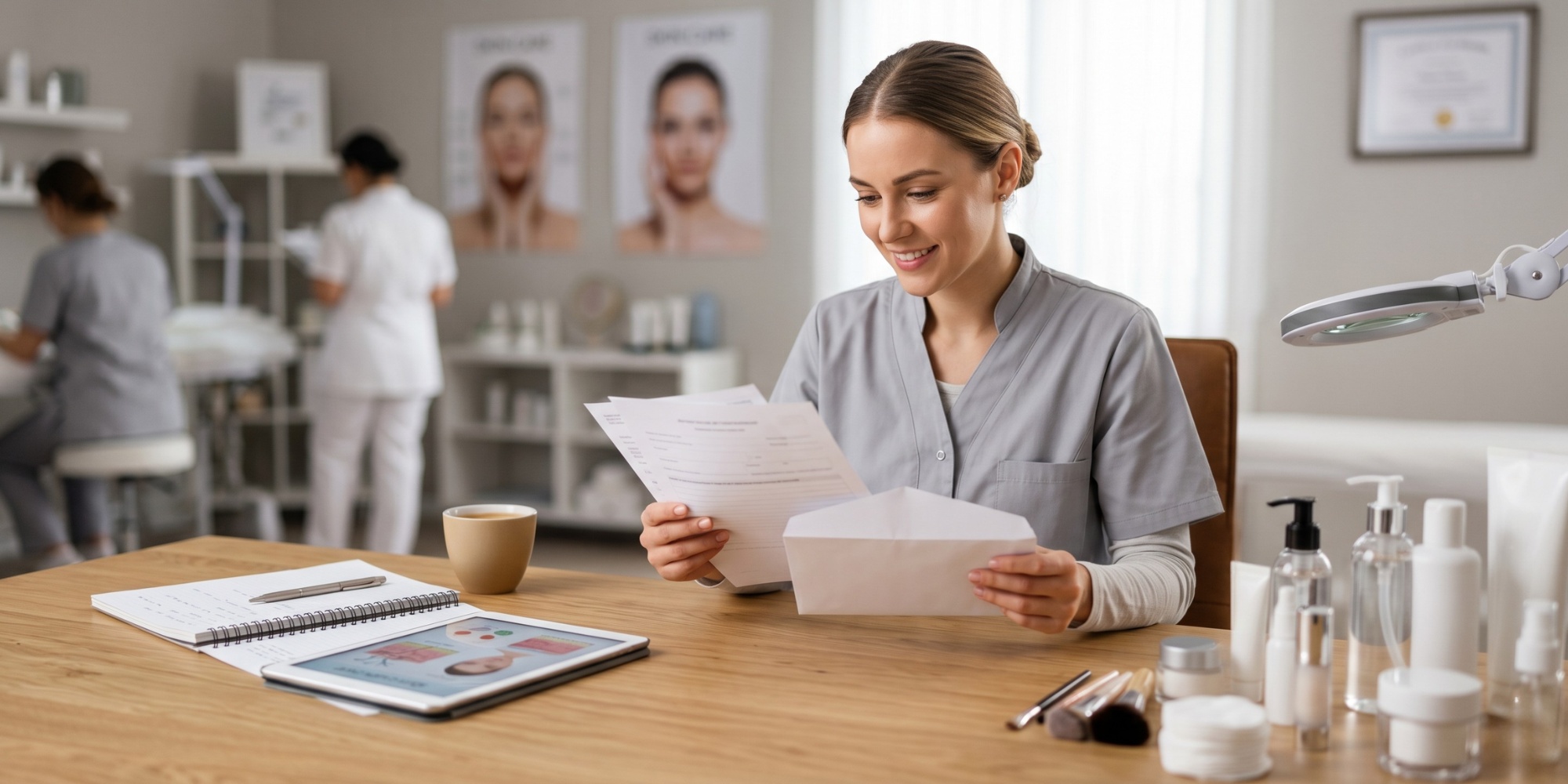
I believe that a great portfolio is just as important as your license. When you are writing an esthetician job description for a resume with no experience, focus on your clinic hours and your knowledge of sanitation. Most hiring managers will ask you to perform a practical interview. They want to see how you analyze skin and how you recommend a post-care routine. Be ready to explain how you handle difficult client questions or when you would choose to refer someone to a medical provider.
Your Future in Professional Skincare
Choosing where to start your education is a major decision. The data is clear: the demand for skincare specialists is rising, and the opportunities in medical and luxury settings are expanding. However, a license is only the foundation. I’ve seen that the best careers are built on a “Salon Ready” philosophy that prepares you for real-world client interactions and professional standards.
At Neosho Beauty College, the goal is to bridge the gap between the classroom and the workplace. We focus on hands-on experience and the professional habits that employers really value. With a legacy that dates back to 1983, we have spent over 40 years helping students turn their interests into professional careers.
If you are interested in learning more about how to begin your own journey, you can find all the details on our Enrollment page. We invite you to fill out the contact form at the bottom of the page to connect with our team and discuss your goals.
FAQ: Common Career Questions
Is it hard to find a job as an esthetician? The outlook is very positive. With a projected growth of 7% through 2034, there are many opportunities in spas, specialty studios, and retail settings.
What career cluster does this work fall under? It is usually listed under Human Services or Personal Care. You can find more details on how it relates to broader industries on the CareerOneStop portal.
Can I move to another state? Most states have a process for license transfer, though you may need to complete extra hours or exams. I suggest looking at our guide on how state board exams and transfer rules work to see what you might need for a specific area.
Do I need a degree for medical settings? You do not need a four-year college degree, but you must have a state license. While “medical esthetician” is a common term, it usually refers to the workplace rather than a different kind of license. Always verify your state’s scope of practice before performing advanced treatments.