


Starting the journey from a beauty lover to a licensed professional is really about looking past the surface. It involves a deep dive into nail technology procedures and the science of keeping the nail structure strong while ensuring chemical safety. I remember when I first started, watching a pro sculpt extensions seemed like magic, but I eventually realized it’s just the result of learning specific motor skills and understanding the tools in your hand.
The industry in 2026 has transitioned toward a more clinical standard often called medical-grade manicuring. If you are trying to figure out how to bridge the gap between basic salon work and advanced artistry, our 2026 career kickstart guide is a great way to map out your professional future. Recent data from Business Research Insights shows that over 32% of clients now have sensitivities to common chemicals, which means now is the time to become a specialist who focuses on health.
Key Takeaways
- Market Trends: The industry is on a path to reach $122.7 billion by 2035, with a major focus on skin-first and clinical-grade services.
- Legal Compliance: Because of MoCRA, we have to understand product chemistry to stay in line with new FDA safety standards and recall powers.
- Advanced Methods: Modern success is built on Builder-in-a-Bottle (BIAB) and precise e-filing techniques rather than old-school, heavy acrylics.
- Health Science: Bioactive ingredients like calcium silicate are now clinically shown to boost nail thickness by 39%, shifting our role toward being health consultants.
Checking Your 2026 Starter Kit
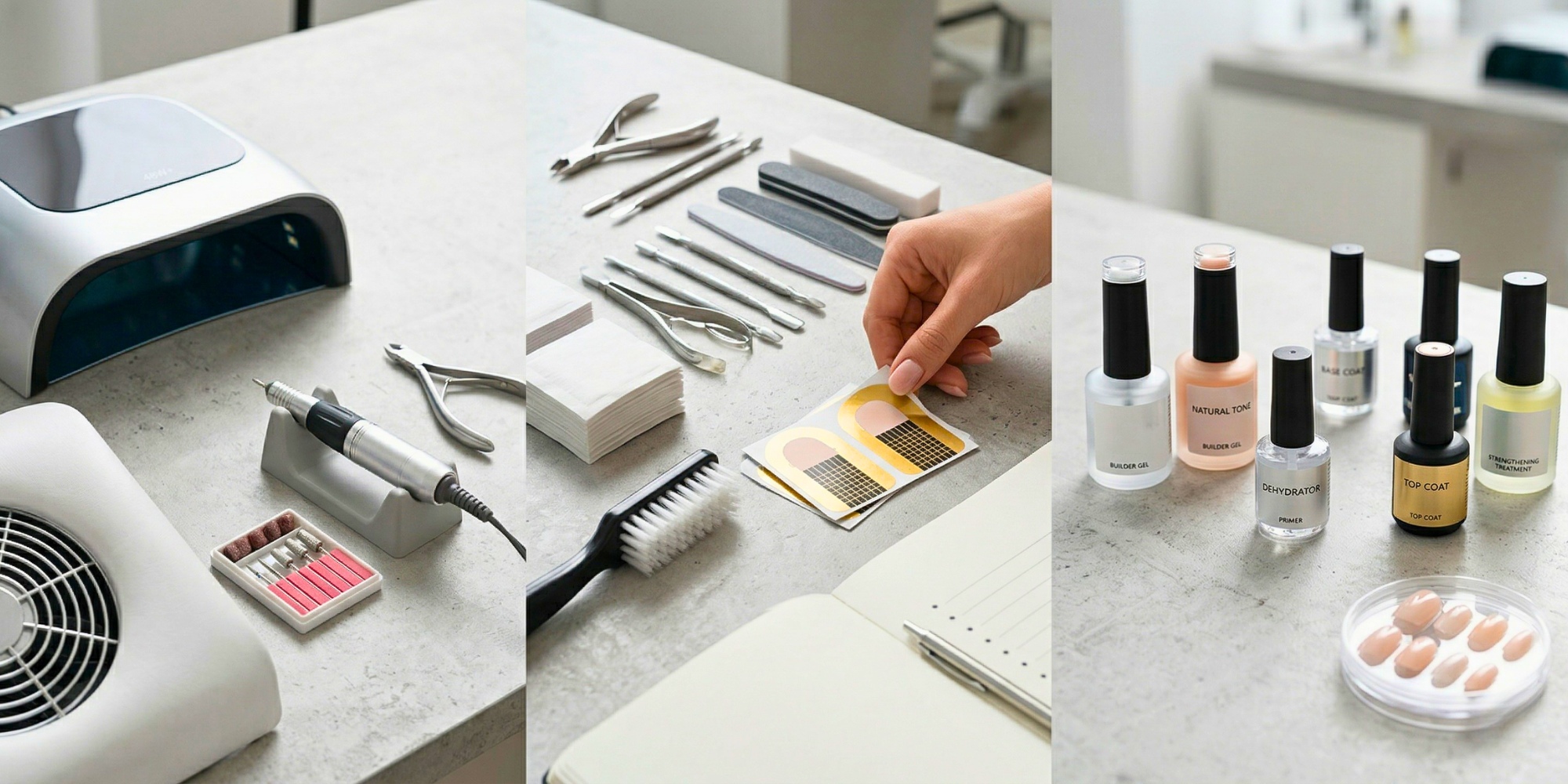
I know that the initial startup costs and the time it takes to learn a new trade can feel a bit daunting. To help you plan things out, I recommend looking over the requirements and tuition for nail technicians so you can move forward with a clear plan. When you start building your own nail technology kit, I find it helpful to divide your purchases into four distinct groups to understand what are the 4 types of nail technology tools you’ll be using:
- Equipment: These are the permanent assets, like your UV/LED lamps and high-torque E-files.
- Implements: These are multi-use steel tools, such as nippers and pushers.
- Materials: These are your disposables, including files, buffers, and wipes.
- Professional Products: This covers the chemistry, like dehydrators, primers, and gels.
When I think about what beginner nail techs need, I always tell them to put their own health first. Your nail technology tools should definitely include a HEPA-filtered dust extraction system. In today’s world, this isn’t just a luxury – it’s a necessity for a long career.
The Architecture of Professional Tools
I see a lot of beginners spend way too much money on the latest polish colors while neglecting the “workhorse” tools that actually make the business run. When we look at what nail technicians use, we have to separate our daily materials from our long-term investments.
Understanding Permanent Items
In a professional setting, students often ask: what are permanent items utilized in nail technology known as? Put simply, these are your equipment and multi-use implements. Unlike things you throw away, these items stay with you. Investing in high-quality stainless steel nippers and 48W+ UV/LED lamps is the foundation of your workspace. I always suggest getting autoclave-ready steel to make sure you can meet the high clinical standards for sanitation.
Hygiene and Professional Standards
Sanitation today is about much more than just a quick soak. Advanced nail technology tools like a salmon hygiene technology nail brush are now standard because their bristles don’t harbor bacteria while they help with deep cleaning. Using these kinds of specialized tools is the quickest way to show your clients that you take their safety seriously.
The 2026 Regulatory Environment
Based on the FDA’s MoCRA updates, knowing your brands is now a legal requirement. In 2026, the FDA has the power to pull products used in nail technology off the market if there are safety concerns. Understanding product chemistry is no longer just a bonus; it’s a legal part of being a professional.
Structural Mastery and Extensions
The Geometry of a Perfect Set
Being a premium tech in 2026 means creating “Quiet Luxury” extensions that look natural but are incredibly strong. To do this, I focus on two main pillars: the C-curve and the Apex.
- The C-curve is the horizontal arch of the nail. Just like a bridge, this arch provides the structural strength needed so the nail doesn’t stay flat and weak.
- The Apex is the highest point from a side view. This is the stress point of the nail. When I place the bulk of the product here, it helps the nail absorb impacts without breaking.
The Secret of Nail Forms
Learning how to put on a nail form is one of the most important skills I teach. Unlike plastic tips, a form lets you sculpt an extension that fits the unique shape of a client’s finger. Mastering how to put nail form templates on correctly – so they are flush against the skin – prevents the structural failures that lead to painful breaks later on.
Building with Strength
Once the form is in place, I choose my materials carefully. Many pros are now moving toward things like Diva nail technology builder gel systems. According to recent salon trend reports, these structured manicures allow for 20-30% higher service prices because they protect the nail’s lipid barrier while remaining very durable.
E-Files and Bioactive Science
Mastering the E-File
The e-file is probably the most misunderstood part of a nail care nail equipment list. When you learn how to use an e-nail, you aren’t just “drilling.” You’re doing a precise micro-exfoliation. Using diamond bits at low speeds allows you to clean up the nail edges with surgical accuracy, which helps your gel stay on much longer.
The Science of Healthy Nails
We are currently in an era that prioritizes the biological health of the nail. Products like OPI Nail Envy original strengthener with Tri-Flex Technology are designed to mimic the nail’s natural keratin. By understanding how Tri-Flex Technology creates a flexible shield and how a nail care pen with nail matrix technology supports the growth center of the nail, you can offer services that actually repair damage. This is essential for helping clients who have suffered from over-filing in the past.
The Evolution of Press-ons
If you think press-ons are just for home use, you should look at press-on nail technology today. In 2026, many pros are creating custom gel sets for high-end clients. Knowing what are nail press-ons in a professional context – hand-painted, bespoke sets – allows you to earn money even when you aren’t at your station.
Clinical Research Insight
A 2025 clinical study from MDPI showed that bioactive formulas with calcium silicate can increase nail strength by 64% in a month. Your value as a professional goes up when you can explain the science behind the nail technology products you choose.
Aftercare and Your Professional Path
Managing Mechanical Stress
My work doesn’t stop once the polish is dry. I always give my clients specific after care advice for nail technology to help them manage mechanical stress. If I can teach them not to use their nails as tools, my work stays perfect, and I get those five-star reviews that help my career grow.
Building a Future
The nail market is growing fast and is expected to hit $122.7 billion by 2035. While some salons are struggling, specialists who understand these nail tools and uses are thriving. By choosing a path that emphasizes advanced tools nail technicians use, you are setting yourself up for success.
Ready to Start Your Career?
The move toward health-focused and medical-grade services is a huge opportunity for new specialists. At Neosho Beauty College, I believe in a hands-on approach that prepares you for the real world. We make sure you are comfortable with the professional nail technology tools and the various products used in nail technology that top-tier salons expect.
If you are ready to see what your future looks like, I invite you to come visit us. You can see how our programs work, meet the instructors, and experience the energy of our campus.
To find out more about how to join us, you can look at the details in Enrollment and see what it takes to get started. You can also use the contact form at the end of this article to ask us anything or schedule a time to stop by. I’m looking forward to helping you build your career!
FAQ: Tips for New Techs
What tools do you need to do nails at home compared to a professional setting?
Home kits usually don’t have the power of professional nail care equipment. At school, I teach students to use high-torque files and specific LED lamps that ensure the gel cures fully, which helps prevent the allergies often caused by weaker consumer-grade gear.
How should I choose the best products used in nail technology for my kit?
I always recommend system consistency. If you use the base, color, and topcoat from the same brand, the chemical bonds are designed to work together. This is the best way to stop the lifting and peeling that can frustrate clients.
What do nail techs use in a clinical-style salon?
You will need specific things for nail techs like an autoclave for sterilization and high-quality e-file bits. I also suggest using hypoallergenic and HEMA-free products in your nail technology kit to keep your clients’ skin safe and healthy.