What Every Professional Needs: A Nail Tech Skills Checklist of Core Procedures and Essential Tools

Starting the journey from a beauty lover to a licensed professional is really about looking past the surface. It involves a deep dive into nail technology procedures and the science of keeping the nail structure strong while ensuring chemical safety. I remember when I first started, watching a pro sculpt extensions seemed like magic, but I eventually realized it’s just the result of learning specific motor skills and understanding the tools in your hand.

The industry in 2026 has transitioned toward a more clinical standard often called medical-grade manicuring. If you are trying to figure out how to bridge the gap between basic salon work and advanced artistry, our 2026 career kickstart guide is a great way to map out your professional future. Recent data from Business Research Insights shows that over 32% of clients now have sensitivities to common chemicals, which means now is the time to become a specialist who focuses on health.

Key Takeaways

  • Market Trends: The industry is on a path to reach $122.7 billion by 2035, with a major focus on skin-first and clinical-grade services.
  • Legal Compliance: Because of MoCRA, we have to understand product chemistry to stay in line with new FDA safety standards and recall powers.
  • Advanced Methods: Modern success is built on Builder-in-a-Bottle (BIAB) and precise e-filing techniques rather than old-school, heavy acrylics.
  • Health Science: Bioactive ingredients like calcium silicate are now clinically shown to boost nail thickness by 39%, shifting our role toward being health consultants.

Checking Your 2026 Starter Kit

I know that the initial startup costs and the time it takes to learn a new trade can feel a bit daunting. To help you plan things out, I recommend looking over the requirements and tuition for nail technicians so you can move forward with a clear plan. When you start building your own nail technology kit, I find it helpful to divide your purchases into four distinct groups to understand what are the 4 types of nail technology tools you’ll be using:

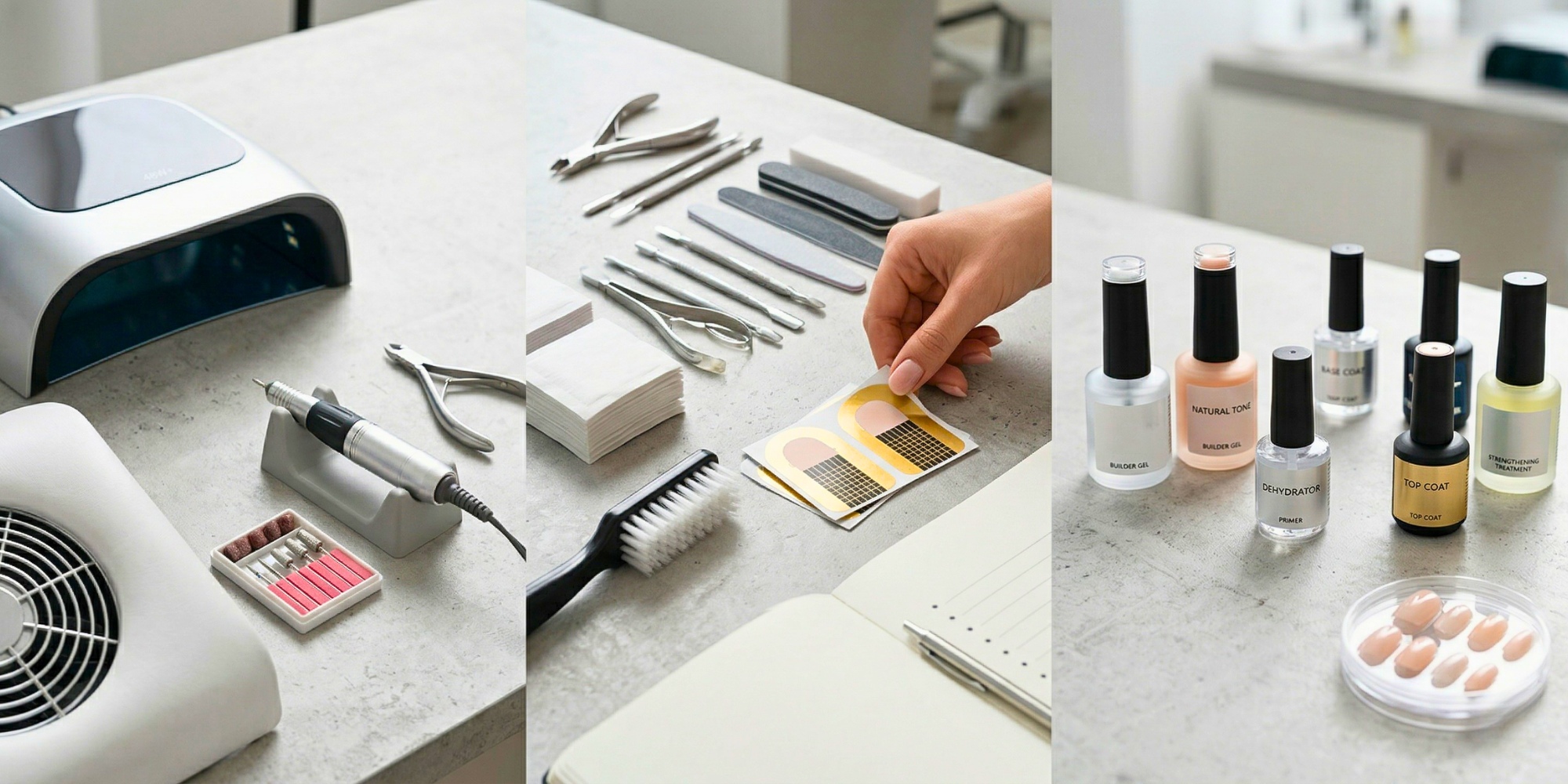
  1. Equipment: These are the permanent assets, like your UV/LED lamps and high-torque E-files.
  2. Implements: These are multi-use steel tools, such as nippers and pushers.
  3. Materials: These are your disposables, including files, buffers, and wipes.
  4. Professional Products: This covers the chemistry, like dehydrators, primers, and gels.

When I think about what beginner nail techs need, I always tell them to put their own health first. Your nail technology tools should definitely include a HEPA-filtered dust extraction system. In today’s world, this isn’t just a luxury – it’s a necessity for a long career.

The Architecture of Professional Tools

I see a lot of beginners spend way too much money on the latest polish colors while neglecting the “workhorse” tools that actually make the business run. When we look at what nail technicians use, we have to separate our daily materials from our long-term investments.

Understanding Permanent Items

In a professional setting, students often ask: what are permanent items utilized in nail technology known as? Put simply, these are your equipment and multi-use implements. Unlike things you throw away, these items stay with you. Investing in high-quality stainless steel nippers and 48W+ UV/LED lamps is the foundation of your workspace. I always suggest getting autoclave-ready steel to make sure you can meet the high clinical standards for sanitation.

Hygiene and Professional Standards

Sanitation today is about much more than just a quick soak. Advanced nail technology tools like a salmon hygiene technology nail brush are now standard because their bristles don’t harbor bacteria while they help with deep cleaning. Using these kinds of specialized tools is the quickest way to show your clients that you take their safety seriously.

The 2026 Regulatory Environment

Based on the FDA’s MoCRA updates, knowing your brands is now a legal requirement. In 2026, the FDA has the power to pull products used in nail technology off the market if there are safety concerns. Understanding product chemistry is no longer just a bonus; it’s a legal part of being a professional.

Structural Mastery and Extensions

The Geometry of a Perfect Set

Being a premium tech in 2026 means creating “Quiet Luxury” extensions that look natural but are incredibly strong. To do this, I focus on two main pillars: the C-curve and the Apex.

  • The C-curve is the horizontal arch of the nail. Just like a bridge, this arch provides the structural strength needed so the nail doesn’t stay flat and weak.
  • The Apex is the highest point from a side view. This is the stress point of the nail. When I place the bulk of the product here, it helps the nail absorb impacts without breaking.

The Secret of Nail Forms

Learning how to put on a nail form is one of the most important skills I teach. Unlike plastic tips, a form lets you sculpt an extension that fits the unique shape of a client’s finger. Mastering how to put nail form templates on correctly – so they are flush against the skin – prevents the structural failures that lead to painful breaks later on.

Building with Strength

Once the form is in place, I choose my materials carefully. Many pros are now moving toward things like Diva nail technology builder gel systems. According to recent salon trend reports, these structured manicures allow for 20-30% higher service prices because they protect the nail’s lipid barrier while remaining very durable.

E-Files and Bioactive Science

Mastering the E-File

The e-file is probably the most misunderstood part of a nail care nail equipment list. When you learn how to use an e-nail, you aren’t just “drilling.” You’re doing a precise micro-exfoliation. Using diamond bits at low speeds allows you to clean up the nail edges with surgical accuracy, which helps your gel stay on much longer.

The Science of Healthy Nails

We are currently in an era that prioritizes the biological health of the nail. Products like OPI Nail Envy original strengthener with Tri-Flex Technology are designed to mimic the nail’s natural keratin. By understanding how Tri-Flex Technology creates a flexible shield and how a nail care pen with nail matrix technology supports the growth center of the nail, you can offer services that actually repair damage. This is essential for helping clients who have suffered from over-filing in the past.

The Evolution of Press-ons

If you think press-ons are just for home use, you should look at press-on nail technology today. In 2026, many pros are creating custom gel sets for high-end clients. Knowing what are nail press-ons in a professional context – hand-painted, bespoke sets – allows you to earn money even when you aren’t at your station.

Clinical Research Insight

A 2025 clinical study from MDPI showed that bioactive formulas with calcium silicate can increase nail strength by 64% in a month. Your value as a professional goes up when you can explain the science behind the nail technology products you choose.

Aftercare and Your Professional Path

Managing Mechanical Stress

My work doesn’t stop once the polish is dry. I always give my clients specific after care advice for nail technology to help them manage mechanical stress. If I can teach them not to use their nails as tools, my work stays perfect, and I get those five-star reviews that help my career grow.

Building a Future

The nail market is growing fast and is expected to hit $122.7 billion by 2035. While some salons are struggling, specialists who understand these nail tools and uses are thriving. By choosing a path that emphasizes advanced tools nail technicians use, you are setting yourself up for success.

Ready to Start Your Career?

The move toward health-focused and medical-grade services is a huge opportunity for new specialists. At Neosho Beauty College, I believe in a hands-on approach that prepares you for the real world. We make sure you are comfortable with the professional nail technology tools and the various products used in nail technology that top-tier salons expect.

If you are ready to see what your future looks like, I invite you to come visit us. You can see how our programs work, meet the instructors, and experience the energy of our campus.

To find out more about how to join us, you can look at the details in Enrollment and see what it takes to get started. You can also use the contact form at the end of this article to ask us anything or schedule a time to stop by. I’m looking forward to helping you build your career!

FAQ: Tips for New Techs

What tools do you need to do nails at home compared to a professional setting?
Home kits usually don’t have the power of professional nail care equipment. At school, I teach students to use high-torque files and specific LED lamps that ensure the gel cures fully, which helps prevent the allergies often caused by weaker consumer-grade gear.

How should I choose the best products used in nail technology for my kit?
I always recommend system consistency. If you use the base, color, and topcoat from the same brand, the chemical bonds are designed to work together. This is the best way to stop the lifting and peeling that can frustrate clients.

What do nail techs use in a clinical-style salon?
You will need specific things for nail techs like an autoclave for sterilization and high-quality e-file bits. I also suggest using hypoallergenic and HEMA-free products in your nail technology kit to keep your clients’ skin safe and healthy.


Do You Actually Need a Certificate to Be a Nail Tech? Breaking Down Requirements, Time, and Tuition

I remember when I first started experimenting with gel kits at home and realized just how much I loved the process of creating something beautiful. It’s a common story for many of us in the beauty world, but the jump from doing nails for fun to doing them as a career involves a lot more than just artistic skill. Navigating the professional landscape in 2026 means dealing with new safety regulations and a much higher standard of accountability from clients. If you are starting to look into making this your full-time job, it helps to check out a career kickstart guide to see how the industry is evolving this year before you get caught up in the paperwork.

What You Should Know Upfront

  • A nail technician certificate is a great educational milestone, but you actually need a nail technology license to legally charge for your work.
  • Clients in 2026 are looking for the safety premium, with over 20% choosing salons based on their medical-grade cleaning standards.
  • Transparency matters when looking at how much a nail tech program cost, including your tools and fees.
  • New federal rules like MoCRA mean every professional needs to be an expert in product safety and chemicals.

A seated woman in a grey apron meticulously arranges various metal manicuring tools like clippers, files, and pushers on a clean white towel atop a wooden desk. Her hands select the implements. On the table are clearly labeled bottles of 'SURFACE CLEANER', 'HAND SANITIZER', 'DISINFECTANT SOLUTION', and a jar for 'SANITIZED TOOLS', along with a box of blue nitryl gloves and an articulated training hand model on a cushion. A textbook with partially visible text related to licensing and safety guides is open, illuminated by natural light from a window.

The Legal Side: Certificates vs. Licenses

I see a lot of people getting confused about whether a diploma is the same thing as a permit to work. It’s one of the most important distinctions you’ll make when starting out.

Educational Goals and Legal Reality

If you are wondering whether you can do nails with a certificate, the answer usually depends on who you are doing them for. You can use a certificate from an online course to show your friends you know what you’re doing, but to work in a salon and get paid, you must have a nail technology license from the state.

A certificate shows you completed your classes, while the license proves you meet the nail technology requirements set by the state health board. When you choose a state approved nail technician program, your credentials become a lot more valuable. In 2026, many states are part of the Interstate Cosmetology Compact, which makes it much easier for licensed pros to move their business to a different state without starting their education from scratch.

New Federal Safety Standards

The industry has shifted quite a bit recently because of the Modernization of Cosmetics Regulation Act (MoCRA). According to the U.S. Food & Drug Administration, there is now much more oversight on the chemicals used in professional products. This means that as a professional, I have to be more than just an artist; I have to be a safety expert. Operating without a proper license in this new environment carries a lot more risk than it used to.

The Training Process: Hours and Exams

Picking the right nail technology program is really your first big business move. It’s often helpful to compare a nail tech program vs cosmetology to make sure you aren’t spending time and money on classes you don’t actually need for your specific goals.

How Many Hours Are Required?

I often get asked how long is a nail program or how long does it take to train as a nail technician. In 2026, most states focus on competency, but you’re still usually looking at 300 to 600 hours. For example, at a manicuring school in Missouri like Neosho Beauty College, the program is typically 400 hours. Full-time students can often finish in about 3 months, while part-time students might take around 6 months.

You might hear about a nail technician apprenticeship as an alternative. While it sounds like a good way to earn while you learn, keep in mind that apprenticeship hours are usually double what you’d spend in school. You also might miss out on the structured nail technology theory that is so important for passing the written part of your exams.

Passing the State Board

The final hurdle is the nail technology exam. To get ready for the nail technology state board, modern schools now use digital simulators and a nail technology state board practice test. These tools focus heavily on things like chemical storage and how to handle blood exposure, which are huge parts of the 2026 exam format.

The Cost of Starting Your Career

Let’s talk about the financial side of things. I know the idea of school debt can be stressful, so it’s important to look at the total investment.

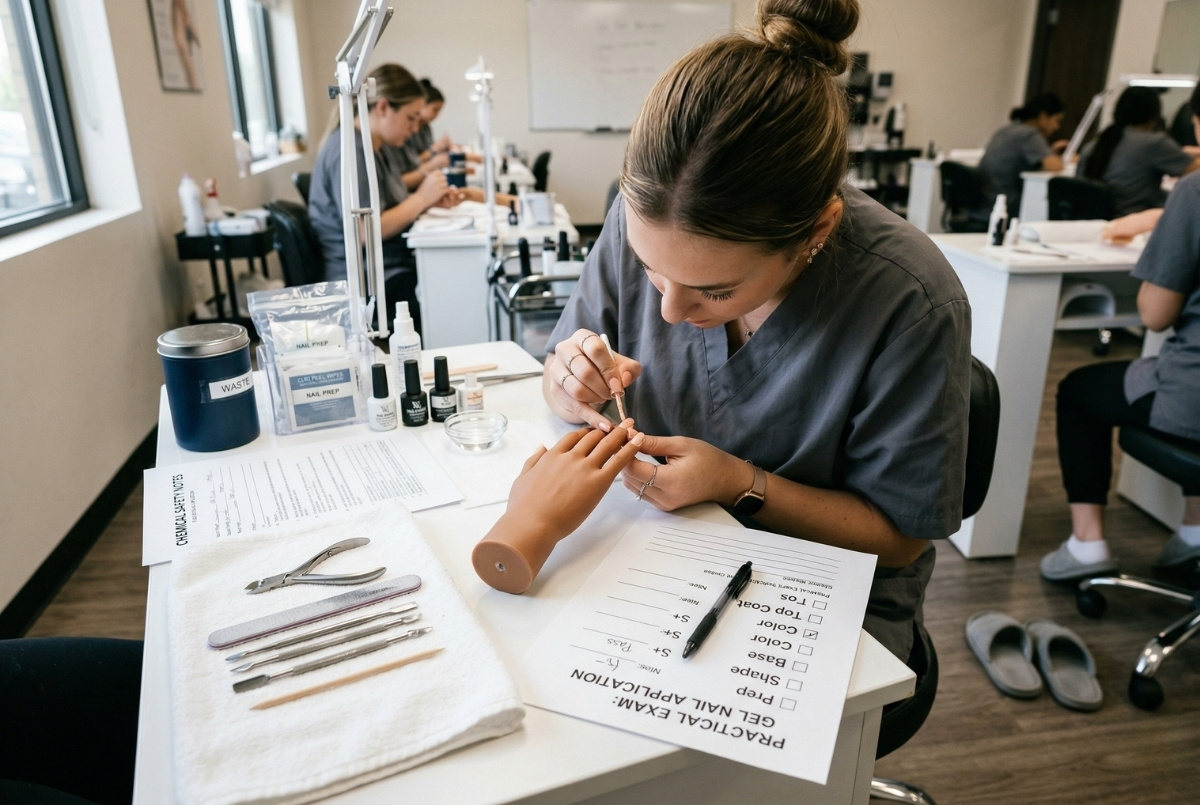
A nail technician student in a gray uniform carefully applying gel to a practice hand at a clean workstation, featuring an exam checklist, sanitized stainless steel tools on a towel, and chemical safety notes in a professional training salon.

Calculating Your Total Investment

When you ask how much is nail technology school, you have to look past just the tuition. You need to consider the total cost of attendance, which includes your equipment and books. At Neosho Beauty College, we prioritize transparency so you know exactly what you’re paying for. A quality nail technology school will usually bundle your tuition with a professional kit that has all the high-end tools you need to start working immediately. This prevents you from having to spend hundreds of extra dollars on supplies halfway through your course.

Funding Your Education

There are more ways to pay for your certificate in nail technology than there used to be. The federal government is expanding access to Workforce Pell Grants for short-term programs starting in July 2026. You can also look into scholarships for nail technology through organizations like Beauty Changes Lives. Most schools also offer internal payment plans to help you manage the cost while you study.

The 2026 Job Market

The market right now isn’t looking for the cheapest services; it’s looking for the safest ones. According to Business Research Insights, a significant portion of customers will only visit licensed technicians because they are worried about salon hygiene. This shift has actually helped drive up what we can earn.

A smiling female nail technician in a sage green apron standing beside a tidy, professional manicure station. The bright boutique salon features warm neutral decor, a framed certificate on the wall, and organized sanitation tools.

What You Can Expect to Earn

Based on Indeed’s data from March 2026, the pay for nail technicians is looking very positive:

  • The national average base pay is around $23.68 per hour.
  • Experienced pros in the industry can command rates over $50 per hour.
  • In luxury boutique markets, some specialized rates are hitting as high as $94.94 per hour.

Remember, these numbers are just the base. Your actual take-home pay usually increases quite a bit once you add in tips and commissions on products.

Ready to Start Your Professional Journey?

I’ve seen how much a career in beauty can change someone’s life, and now that you understand the legal landscape for 2026, you’re in a great position to start. The key is to find a place that doesn’t just teach you how to paint nails, but how to lead the industry with speed, precision, and chemical literacy.

If you want to see what our environment is like and meet the instructors who help our students succeed, I highly encourage you to come visit. Seeing the clinic floor in action is the best way to visualize your own future success.

You can find out more about how to get started in Enrollment. If you have any specific questions, please feel free to use the contact form we’ve left below this article, and I’ll be happy to help you map out your path.

Frequently Asked Questions

What is the difference between a Level 2 and Level 3 nail technician certificate? A Level 2 certificate usually covers standard services like manicures and basic enhancements. Level 3 is for those who want to master advanced chemical compositions and medical-grade sanitation.

Can I go to nail school online in 2026? Many schools use a hybrid model now. You can often do your theory work online, but you still have to complete your hands-on hours at a physical manicuring school to qualify for your license.

How does the Interstate Compact work? This 2026 initiative allows a licensed tech to work in several different states without having to retake the board exam, making your license a much more flexible asset for your career.

Nail Tech Program vs. Cosmetology: Your Guide to Choosing the Right Beauty Career Path

Choosing a career in the beauty industry is a lot more than just having a knack for aesthetics; it is a strategic move into a world that is becoming more specialized by every passing year. If you are standing at the starting line right now, you are probably weighing the pros and cons of a cosmetology or nail technician program to see which one actually matches the lifestyle you want to lead.

I often tell people that this choice isn’t just about picking a school. It is about deciding if you want to be a beauty polymath who can do it all, or a technical specialist who dominates a specific niche. Today’s beauty market is looking for more than just talent; it rewards deep technical skill, a rock-solid understanding of sanitation, and real expertise. Your education is going to dictate how fast you can get licensed, what services you can legally offer, and how safely you can handle professional-grade products.

Core Facts for Your Career Path

  • Speed to the Finish Line: A nail technology program is usually the quickest way to get your license and start your own business. Depending on where you are, these programs often range from 300 to 600 hours.
  • A Growing Market: The nail salon industry is currently seeing a 10.7% compound annual growth rate (CAGR), according to Technavio (2025). This is actually beating out many other general beauty sectors.
  • The Safety Standard: Professional training is where you build the habits that protect you and your clients. While new federal laws like MoCRA are adding oversight for products, your school training is what helps you navigate OSHA safety rules in a real-world salon environment.
  • Higher Earning Potential: When you specialize, you can often charge premium prices. This works best when you combine top-tier technique with a unique service menu that keeps clients coming back.

Generalist vs. Specialist: How Do You Want to Work?

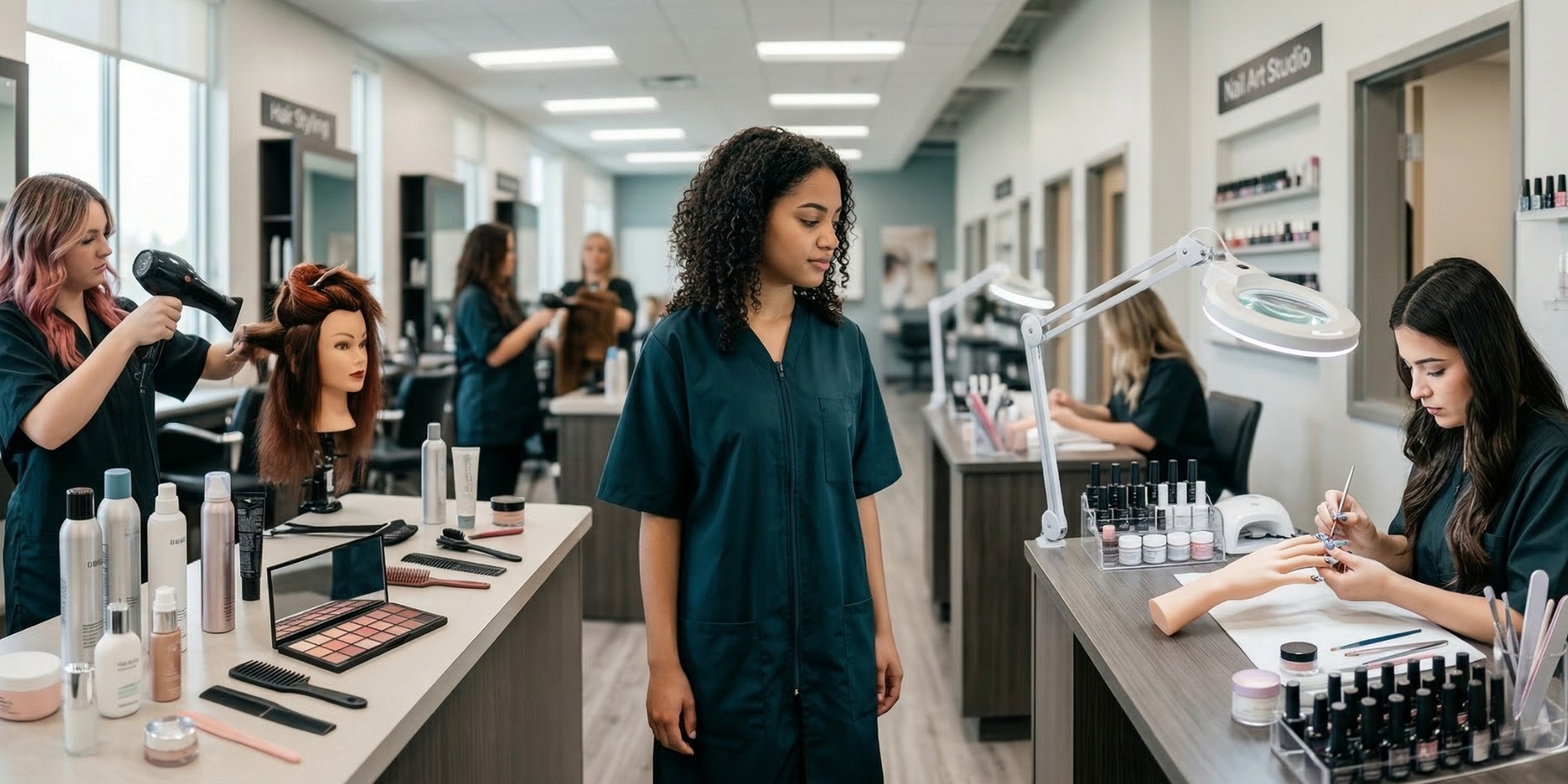
A high-quality realistic photo of a beauty school training studio featuring two students: one practicing hair styling on a mannequin and the other performing a professional manicure at a specialized station.

When I look at the difference between cosmetology and nail technology, people usually ask me what they can do, but I think the better question is how they want to work.

Cosmetology is the broader path. It is designed for the professional who wants chair sovereignty – the power to change their service menu whenever a new trend hits the market. You get trained in the chemistry of hair, the physiology of the skin, and the structure of nails. It is a longer commitment, but it gives you the most variety in terms of your daily routine.

On the other hand, a nail tech program is a deep dive into one specific area. Instead of learning everything from haircuts to facials, you spend your hours focusing intensely on nail chemistry, product safety, nail diseases, and intricate artistry. To help you see what that curriculum actually looks like, I recommend checking out this 2026 career kickstart guide for nail technology, which goes into the foundational steps of the craft.

The 2026 Regulatory Landscape

It is worth noting that beauty products are seeing more federal eyes on them than ever before. Under MoCRA, manufacturers and distributors are now required to report serious adverse events to the FDA. Meanwhile, OSHA still requires every salon to have Safety Data Sheets for any hazardous products. A high-quality beauty program helps you understand these chemical risks and sanitation standards so you are protected the moment you start working.

Your Identity: Technician or Artist?

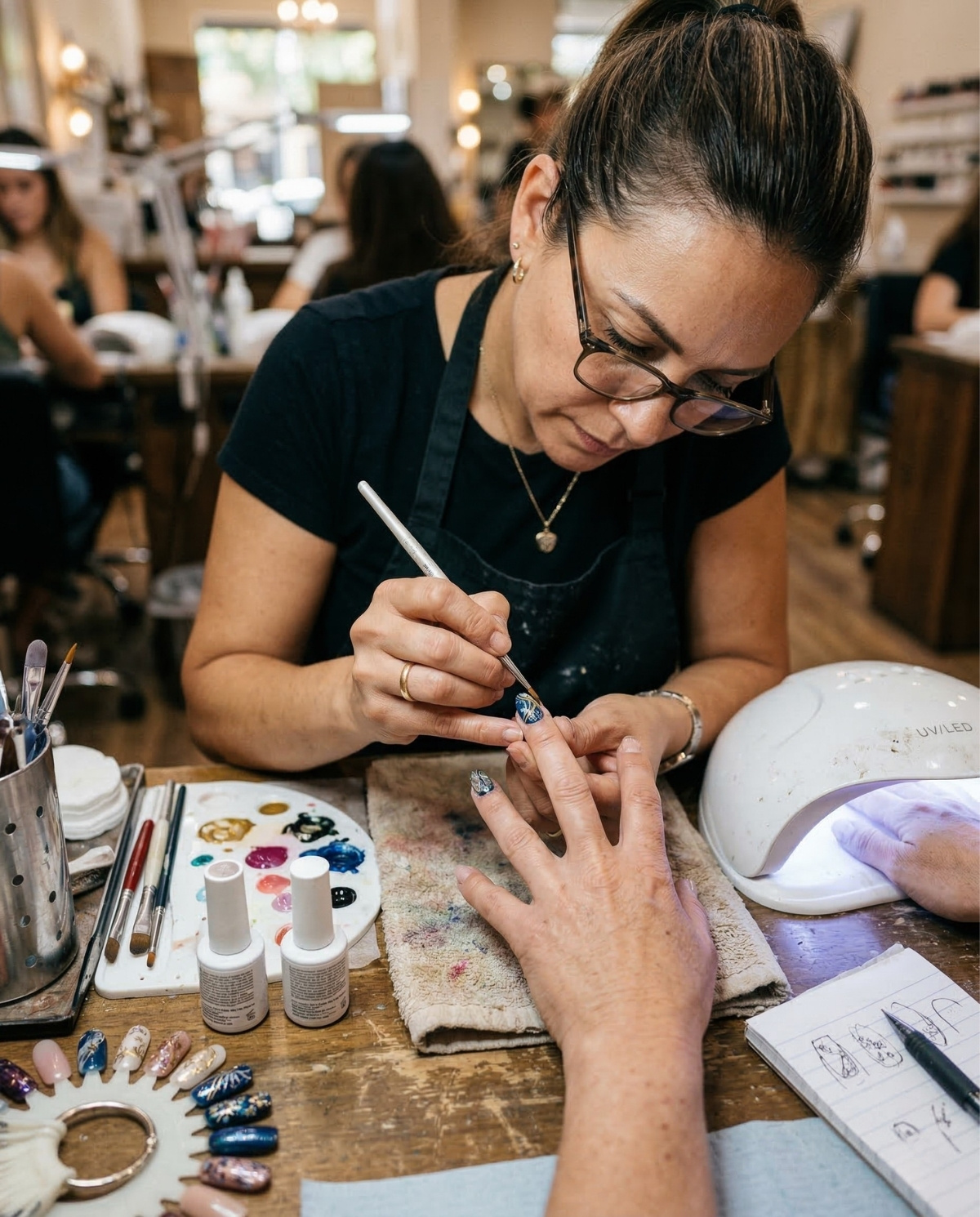
A high-resolution, realistic close-up of a professional nail artist meticulously painting an intricate blue and gold design on a client's nail at a weathered wooden workstation featuring a gel curing lamp and artistic sketches.

I’ve noticed there is often a bit of a gap between being a nail technician or nail artist. Think of your license as your floor – it is the legal requirement you need to work. Your branding, however, is your ceiling.

In a professional nail technology program, you learn the technical why behind every how. You’ll study things like nail structure and product chemistry to make sure you aren’t over-filing or damaging a client’s natural nails. While a technician provides a standard service, a nail artist provides a total transformation. In 2026, the graduates who are really winning are the ones using their technical foundation to open specialized niche studios.

If you go the cosmetology route, your options go way beyond the manicure desk. This license allows you to move into editorial work, film sets, or even becoming a brand educator. If you’re curious about where that path can take you, take a look at these 10 careers you can pursue with a cosmetology license, including some surprising remote roles.

ROI: Getting Your Business Running Faster

If you are looking for the best time-to-income ratio, the nail technology program is the clear winner. You can usually finish your hours and be sitting behind a professional desk in less than six months. For an entrepreneur who wants to start their own brand or rent a salon suite quickly without a year of school debt, this is a very attractive path.

That said, the cosmetology or nail technician program debate often ends with people choosing the former for the career safety net. It takes longer to complete, but you are almost immune to downturns in a specific niche. If nails aren’t trending one year, you can lean into hair or skin services without needing a new license.

The $9.48 Billion Market Trend

We are seeing a trend called premiumization right now. While the whole beauty industry is growing, research from Technavio’s 2025-2029 Nail Salon Market Report shows that the specialized nail sector is expanding at that impressive 10.7% CAGR. People are moving away from all-in-one salons and looking for specialty boutiques where they know they are getting expert care.

Wellness and Clinical Precision

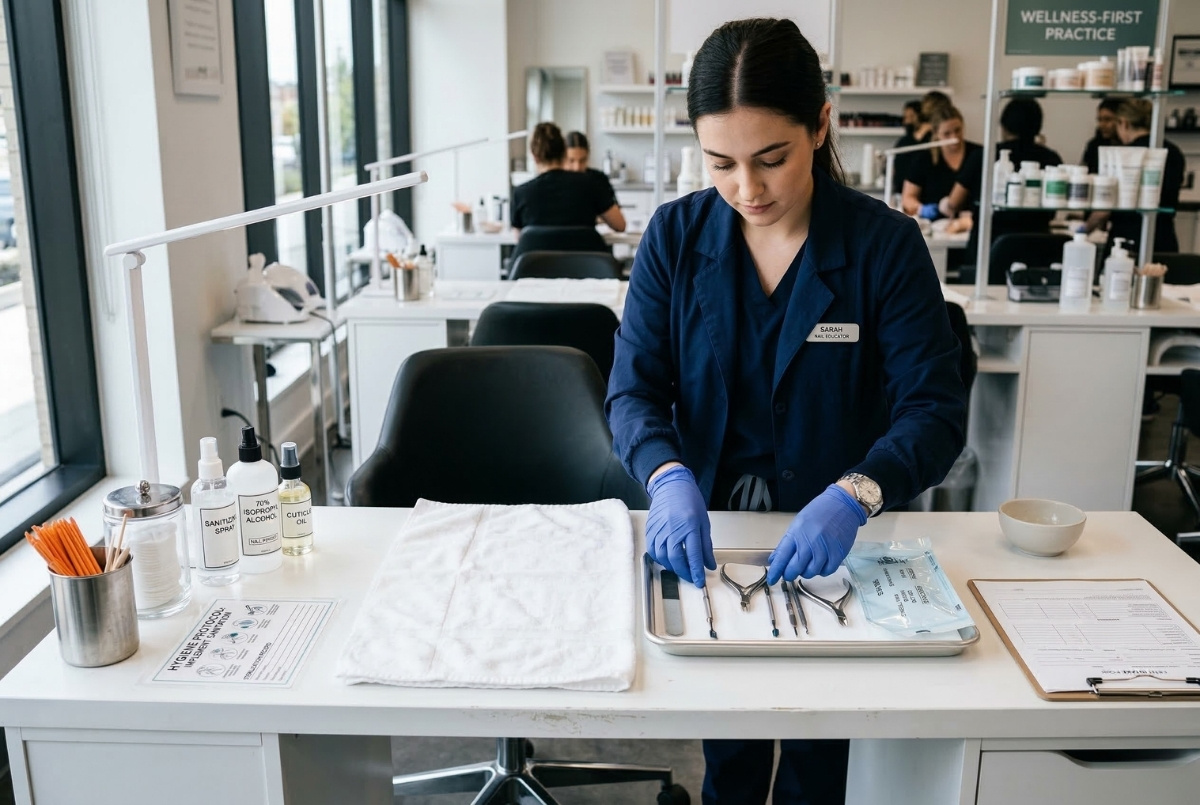
A professional nail technician wearing blue gloves and scrubs, meticulously arranging sanitized metal implements in a stainless steel tray at a clean, modern workstation in a high-end beauty training lab.

One thing that really separates a professional education from learning on your own in 2026 is the focus on the biology of the nail. Professional tools are everywhere, but they don’t give you the technical base to manage physiological risks.

There is a major shift toward wellness-first protocols. For example, a 2020 study in Skin Appendage Disorders showed that specific nail-strengthening formulas could improve nail hardness by 26.7% over 84 days for people with brittle nails. As a pro, you learn how to integrate these evidence-backed products into your care.

We are also seeing a lot of buzz around dry manicure techniques. A 2025 review on Advanced Dry Manicure Techniques suggests these protocols might reduce risks associated with water soaking, like nail plate expansion. This is the kind of high-level knowledge that makes you a reliable pro in the eyes of your clients.

Which Path Should You Choose?

Choosing between a cosmetology or nail technician program really comes down to what you want your daily life to look like.

  • Choose Cosmetology if you love variety and want the freedom to jump between hair, skin, and nails whenever the market changes.
  • Choose Nail Technology if you have a great eye for detail, a love for the science of products, and a goal to own a specialized studio as fast as possible.

Your future isn’t defined by the license alone; it is about the mastery you claim over your craft.

Ready to Start Your Journey?

The beauty industry in 2026 needs more than just people who can do the work – it needs visionaries. At Neosho Beauty College, we’ve spent over 40 years helping students turn their passion into a real-world career. I believe in a salon-ready approach, which means we focus on bridging the gap between the classroom and the high-end professional world from day one.

When you join us, you’re stepping into a legacy of excellence that dates back to 1983. We focus on providing the mentorship you need to turn your ambitions into a sustainable, high-growth career. If you’re ready to see the difference for yourself, I invite you to come visit us. You can walk through our facilities, meet the instructors, and see if this is the right fit for your future.

You can find out more about the next steps on our Enrollment page. If you have questions or want to chat with our team, feel free to fill out the contact form at the bottom of this page. Let’s start building your legacy together.

FAQ: The Reality Check

What if I get a Nail Tech license but want to do hair later?
You would need to go back and enroll in a full cosmetology program. Some of your hours might transfer depending on the state board, but the hair-specific modules would have to be completed from scratch. I usually suggest the specialist path only if you’re sure hair isn’t your main interest.

Is the nail technology program market too crowded in 2026?
The demand is still incredibly high, but you have to stand out. The U.S. Bureau of Labor Statistics projects a 7% growth for manicurists and pedicurists through 2034. In my experience, specialization and quality of service matter much more than how many salons are on your block.

Can a cosmetology license get me into a medical spa?
It is a great foundation, but med-spa work usually requires extra training or specific certifications depending on the machines or treatments being used. Always check your local state requirements for medical-grade services.

What Are Manicuring and Nail Technology? Your 2026 Career Kickstart Guide

I remember spending countless hours at my desk trying to get a set of nails just right, wondering if this was just a creative hobby or something I could actually do for a living. In 2026, the beauty industry has transformed. It isn’t just about basic service anymore; it is a specialized blend of chemistry and hand health. This guide is my professional introduction to nail technology, designed to help you transition from a dedicated enthusiast into a high-earning, licensed specialist.

Crucial Insights for New Professionals

  • Market Potential: The industry is seeing steady growth of 7% through 2034, largely because high-manual dexterity roles are incredibly difficult for AI to replicate.
  • Financial Outlook: In luxury markets, specialized technicians are seeing a significant manicuring and nail technology salary that can range between $34 and $94 per hour.
  • Modern Safety: Regulations in 2026 have pushed for TPO-free and HEMA-free chemistry, making a formal education in toxicology more important than ever.

The Science Behind the Style: More Than Just Polish

To truly get a handle on the nail technology meaning in the current era, I believe you have to look past the aesthetic of the final look. Modern technicians act more like surface chemists. Every service I provide involves managing a chemical reaction called polymerization on a living surface. Understanding how UV light interacts with specific formulas to create a bond without damaging the natural nail is what separates a true pro from an amateur.

Defining the Role of a Technician in 2026

When people ask what are nail techs in the current market, I usually describe them as the primary care providers for the hands. Beyond the artistic side, your job involves being able to identify various nail pathologies. A trained professional can tell the difference between a simple bruise and something as serious as subungual melanoma. I see us as the first line of defense for a client’s hand health, which is why getting your license is so vital for public safety.

The Toxicology Shift: Safety First

The shift toward safer products is a major talking point in the industry right now. According to the New Rules of Nail Care from StyleSpeak, the move away from certain chemicals has changed how we approach service. Education today isn’t just about application; it’s about knowing how to read a Safety Data Sheet (SDS) to ensure you are using biocompatible formulas. For those of you just starting out, resources like HONA’s Knowledge Hub are great for mastering product chemistry before you even begin your first day of school.

Navigating the Career Path and Economic Reality

There is often some confusion regarding manicuring vs nail technology. In most areas, your manicuring license is your legal permission to perform services for pay. However, your nail technology training is what gives you a competitive edge. While a manicurist might focus on basic maintenance, a nail technologist is trained to engineer structures – like balancing the apex of an extension to prevent trauma to the natural nail.

Longevity: Nail Technology for Beginners

For anyone looking into nail technology for beginners, I always emphasize ergonomic longevity. I’ve seen many self-taught artists leave the industry after just a few years due to neck strain or carpal tunnel. A professional program teaches you the proper biomechanics – how to position your chair and hold your tools – to ensure you can enjoy a long and healthy career.

Salary Tiers and Job Security

Data from the U.S. Bureau of Labor Statistics Occupational Outlook shows that this field has a bright outlook with tens of thousands of job openings projected annually. While general statistics on trends from Indeed can give you a baseline, I’ve found that those who focus on medical manicuring or architectural enhancements often command much higher rates in high-demand hubs.

The 2026 Aesthetic: Soft Minimalism and Tech

The dominant style in 2026 has shifted toward soft minimalism. As noted in Vogue Scandinavia’s report on non-negotiable nail trends, milky whites and clean, clinical-grade health are the top priorities. This trend is less about flashy art and more about perfect shaping and natural nail integrity.

Integrating Modern Tech Into the Salon

We are also seeing technology become a major partner in the salon. According to SNS Chairs’ analysis of 2026 market trends, the use of augmented reality is growing. High-end salons now use AR to simulate a look for a client before any filing begins, which helps ensure they walk away happy with their service.

Start Your Professional Chapter at Neosho Beauty College

If you have the passion and the eye for detail, the only thing you are missing is the right foundation. At Neosho Beauty College, I know that our goal is to help you move beyond the hobbyist stage and into a professional environment. We focus on making sure you are salon ready from the moment you graduate, with the technical skills and business knowledge you need to succeed in the modern market.

I encourage you to take that first step toward your new career and see our campus for yourself. You can find out more about our application process and current opportunities on our Enrollment page. If you have any questions about how to get started, please feel free to fill out the contact form we’ve left at the end of this article, and we will be happy to help you find your place in the industry.

Frequently Asked Questions

Can I perform medical services with a standard license?
A standard license allows for cosmetic treatments. To work in a medical capacity, you would need to pursue an advanced certification that focuses on aseptic techniques for high-risk clients.

How long does it take to complete the training in Missouri?
Missouri has specific hour requirements for licensure, and the time it takes to finish can vary depending on whether you are attending on a full-time or part-time basis.

Is the market currently oversaturated?
While the budget-end of the market can be busy, there is actually a shortage of specialists who understand clean beauty and toxicology. Clients are actively looking for professionals who prioritize health over speed.

What does soft minimalism mean in 2026?
It is a trend that focuses on perfect architectural shaping, like the C-curve, and using negative space. It’s a sophisticated look that highlights the health of the hand.