Can Anyone Get Into Cosmetology School? What You Actually Need to Know Before Applying

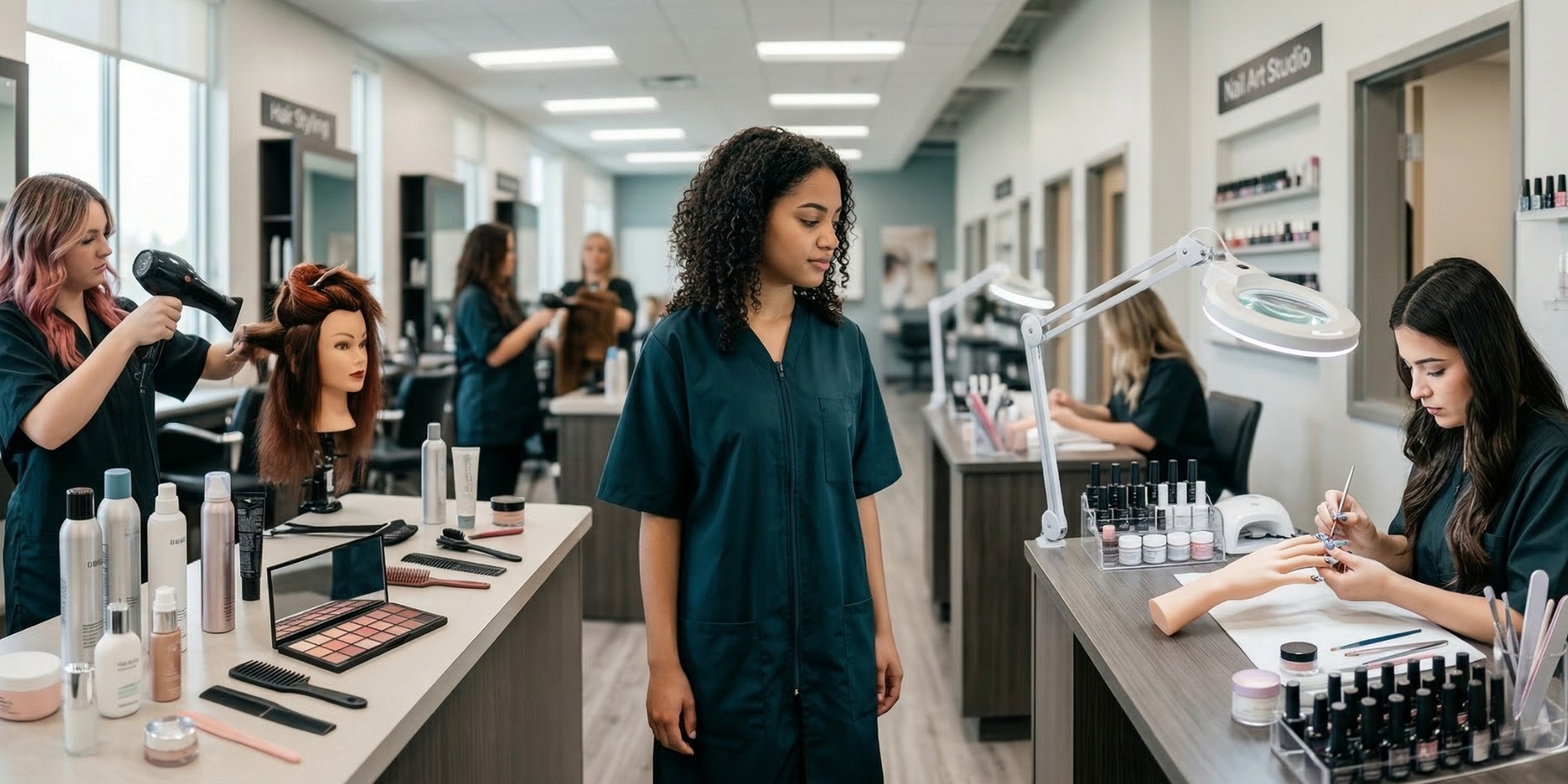
I’ve spent a lot of time talking to people who are ready to trade their office chair or retail shift for a styling chair, but they often hesitate at the very first step. There is a common fear that the door might be locked if your educational background isn’t traditional or if you haven’t been doing hair since you were five years old. I want to clear up the confusion about who these programs are actually designed for and what you really need to get started.

When you look at how to enroll in cosmetology school, it’s easy to feel overwhelmed by the fine print, but the process is usually much more straightforward than people think. I’m going to walk you through how the requirements work and how we handle things here at Neosho Beauty College.

Why This Feels So Confusing: The Three Different Gatekeepers

One thing I always tell prospective students is that there isn’t just one single set of rules. You actually have to satisfy three different groups, and they don’t always ask for the same things. This is usually why the answers you find online seem so contradictory.

Admissions at the School Level

Every school has its own internal standards for who they accept. This usually involves an interview and a look at your background to make sure you’re a good fit for the pace of the program.

The State Board Standards

This is the most critical part because it’s about your future license. In Missouri, we follow the rules set by the Missouri State Board of Cosmetology and Barber Examiners. They have specific age and education minimums that every school must follow so that you are eligible to take your exams after graduation.

Federal Funding Rules

If you are looking for financial assistance through the government, the rules for your education status might be a bit stricter. If you don’t have a high school diploma or a GED, there are specific ability to benefit state process and eligible career pathway programs that can sometimes bridge the gap.

GED, No Diploma, No GED: What That Means for You

I get asked all the time if someone can go to cosmetology school without a diploma or if it’s possible to join with a GED. The good news is that for most people, a GED is treated exactly like a high school diploma. If you have that equivalency, you have already checked off one of the biggest cosmetology education requirements.

If you currently have neither a diploma nor a GED, things are a bit more nuanced but not necessarily impossible. Some people look for cosmetology schools without ged or diploma requirements, but you have to be careful here. While some schools might offer a way to start your training while you work on your GED, you usually need that credential finished before you can apply for your actual state license. It’s always best to have a clear plan for your high school equivalency so you don’t hit a wall right when you’re ready to start working.

Starting Early: High School Students and Age Limits

If you’re still in your teens and wondering how old to go to cosmetology school, you might be surprised to learn how early you can start. In Missouri, many students begin their journey at 16 or 17 years old.

There are even options for cosmetology for high school students where you can earn hours while still finishing your regular classes. If you are under 18, you will simply need a parent or guardian to sign your enrollment paperwork. Starting at 16 or 17 is actually a brilliant move because it means you could be a fully licensed professional by the time your friends are only halfway through a traditional four-year college degree.

Is Getting Accepted Actually Difficult? What Blocks People

I often hear people worrying about how hard is it to get into cosmetology school or if they have enough natural talent to be accepted. I want to be very clear: beauty school isn’t like a fine arts academy where you have to prove you’re already a master before you can learn.

Most of the time, the things that actually hold people back aren’t a lack of talent, but rather simple logistics. You might run into delays because of:

  • Missing Paperwork: Not having your birth certificate, ID, or transcripts ready to go.
  • Class Capacity: State laws limit how many students we can have per instructor, so sometimes a start date simply fills up.
  • Funding Timing: Waiting too long to finish your FAFSA or personal financial plan.

So, while not everyone gets into their preferred start date instantly, it’s usually a matter of getting your documents in order rather than a competitive audition.

Practical Steps for Getting Started Without Feeling Misled

If you want a clear answer on whether you can start right now, I suggest taking a very direct approach. First, check the Missouri state board website to see the current training hour requirements and age rules.

Once you know the state rules, look for a school that aligns with those goals. When you visit a campus, I recommend asking very specific questions about how they handle your specific education status and what their specific cosmetology qualifications are for new students. If you don’t have a diploma, ask them if they have a clear written policy on the ability to benefit path so you aren’t left guessing.

Who This Career Is Really For (and How to Win)

In my experience, the students who thrive aren’t always the ones who were the best at doing their own hair in high school. The people who really succeed are the ones who show up, stay consistent, and aren’t afraid to make mistakes on a mannequin head.

Beauty school is for people who value a career that is hands-on and social. It’s for people who are okay with the fact that skill comes from repeating a technique a hundred times, not just from being born with it. If you’ve had a non-traditional education or you’re worried about fitting in, just know that the beauty industry is built on people from all walks of life.

Your Training at Neosho Beauty College

At Neosho Beauty College, we are dedicated to helping you turn your passion into a professional license. We make sure our programs are fully aligned with Missouri state standards so you can feel confident in your education.

Our programs focus on the actual skills you need for the workforce:

  • Master Cosmetologist
  • Esthetician
  • Nail Technician
  • Instructor Training

Take the Next Step

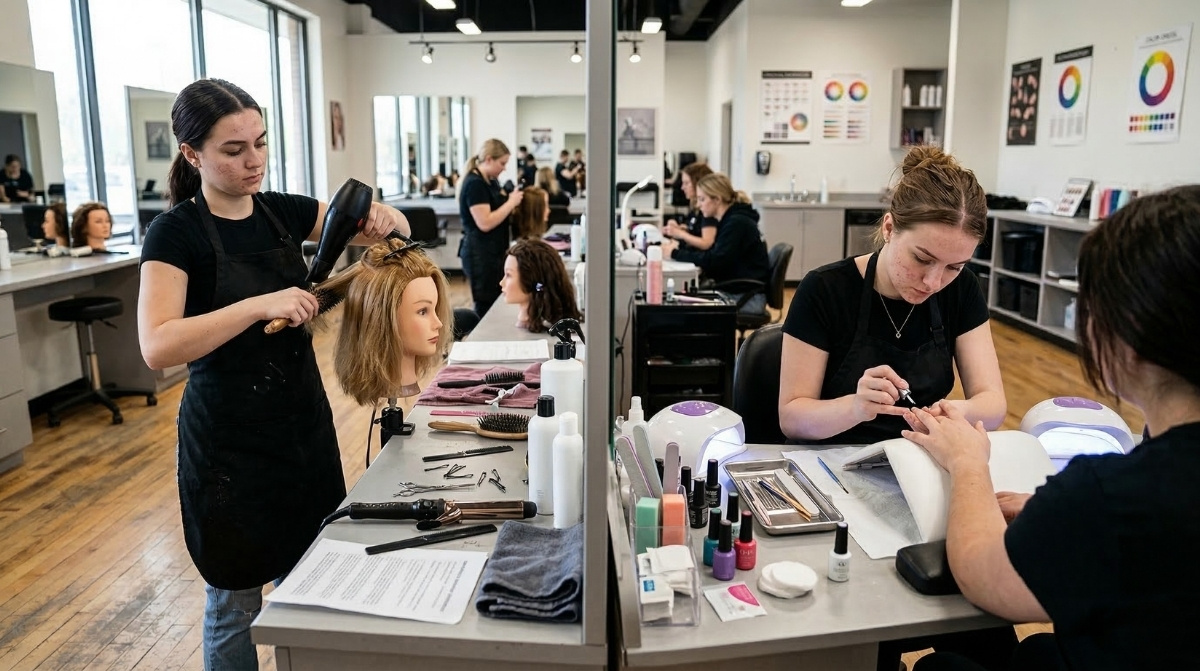
I highly recommend looking through our admissions requirements on our website to see exactly what you’ll need to bring with you. If you’re ready to see the clinic floor in person and get a feel for the environment, I’d love to have you in for a tour. Our contact form is right below, and our team is ready to help you navigate the process.

The Ultimate Truth About Cosmetology Jobs Without License Requirements

If you’ve been scouring the internet for ways to break into the beauty world without a license, I know exactly where you’re coming from. You aren’t trying to be reckless; you’re just trying to be realistic about your future.

Maybe you’re itching to start earning a paycheck now rather than later. Maybe the cost of school feels like a huge mountain to climb, or you’re just plain frustrated by the conflicting advice you see on social media. One person says you’re fine, another says you’ll get fined – it is exhausting.

I want to clear the air for you. Let’s talk about what cosmetology without a license actually looks like legally, where that “red line” is drawn, and how you can start building a career today while staying completely on the safe side of the law.

License vs Certification vs Business Permit: What You Actually Need

This is usually where the most confusion happens, so let’s break it down in plain English. I like to think of these as three different keys to three different doors.

A Professional License

Think of this as your legal green light. It is the permission granted by the state to actually perform services on another human being. States care about this because beauty work often involves chemicals, sharp tools, and sanitation risks. Without this, you generally cannot practice cosmetology.

A Professional Certification

A certification is basically a medal of skill. It proves you took a specific course (like for lash extensions or advanced makeup). While it looks great on a resume and builds trust, it does not replace a state license. Having a certificate doesn’t automatically mean you can legally charge for that service in a professional setting.

A Business License

This is all about paperwork and taxes. Even if the job you’re doing doesn’t require a beauty license, you still need a business permit if you’re selling products or running a shop. This is about being a legal business entity, not about your hands-on skills.

A quick way to remember it:
License = permission to touch, certification = proof of skill, business license = permission to trade.

How the Law Decides What Needs a License

Most state boards don’t regulate based on how “pretty” the result is; they regulate based on risk and safety.

Usually, you’ll find that a license is mandatory if the work involves:

  • Cutting hair or altering its structure
  • Using strong chemicals (like dyes, relaxers, or deep chemical peels)
  • Tools that require high-level sanitation
  • Anything that could potentially break the skin or cause an infection

Services that stay “on the surface” are often less restricted. This is why you’ll hear so many different stories – every state has its own idea of what “surface-level” means. It is why one person might tell you that you can do makeup without a cosmetology license in their town, while someone a state over says it is a big no-no. Two people can swear opposite things and both be right depending on where they live.

Beauty Careers You Can Step Into Right Now

If your main goal is to get your foot in the door and start making money, there are plenty of cosmetology jobs without license requirements that are both fun and legal.

Behind-the-Scenes and Creative Roles

These are fantastic for building a network and learning the “business” side of beauty without any legal stress:

  • Beauty Retail and Sales: Working at a beauty supply store or a high-end counter.
  • Salon Coordinator: Managing the front desk, bookings, and client experience.
  • Content Creation: I see so many people making a full-time living doing reviews, tutorials, and beauty blogging.
  • Beauty Writing: Writing for brands, blogs, or industry newsletters.
  • Consulting: Helping people pick the right products and routines without actually applying them to their skin.

Product-Based Side Hustles

You can absolutely own a beauty-related business without being a licensed pro. Many people ask, “Can I own a salon without a cosmetology license?” and the answer is often yes! You just have to hire licensed pros to do the actual hair and skin work while you handle the management side.

Other product ideas include:

  • Creating and selling your own press-on nail brand.
  • Retailing beauty tools or accessories.
  • Selling digital guides, like “Skincare Checklists” or hair styling routines.

Lashes, Nails, Hair, and Makeup: Where Is the Legal Line?

This is where the questions get specific. Let’s look at the “big” categories and where the legal lines usually fall.

Lashes and Microblading

In most states, the answer is a bit tricky. Because you’re working with strong adhesives so close to the eyes, many boards require you to be a licensed esthetician or cosmetologist. So, if you’re wondering, “can I be a lash tech without a cosmetology license?”, you really need to check your specific state board. Similarly, can you do microblading without a cosmetology license? Usually no, as it is often treated as permanent makeup or body art.

Nails and Hair

If you are doing a full mani-pedi with cuticle cutting, you almost certainly need a license. However, if you are selling custom-made press-on nails, you are in a safe lane. For hair, can you be a barber without a cosmetology license? Generally, anything involving shears or hair dye requires a professional license.

Makeup Artistry

This is often the most flexible area. People often ask, “can you be a makeup artist without a license?” In many places, “application only” is allowed. However, if you want to work on a professional film set or in a high-end salon, they will usually require a license for insurance reasons.

How to Check the Rules Without Getting Overwhelmed

If you want a solid plan to move forward, I recommend doing a little targeted research. Every state has a specialized agency – usually the Board of Cosmetology and Barber Examiners – that writes the rulebook for your local area.

To get the most accurate answers, try these steps:

  • Visit the official website for your state’s Board of Cosmetology. They almost always have an “FAQ” or “Laws and Rules” section.
  • Look for specific details on the service you want to offer. For instance, if you are wondering about the specifics of being a nail tech without a cosmetology license or the logistics of how to open a hair salon without a cosmetology license, the board will have the exact legal wording you need.
  • Keep an eye out for “scope of practice” documents. These tell you exactly what you can and can’t do with (or without) a specific license.

Building a Career You Can Be Proud Of

At the end of the day, there are ways to work in the industry today, but the real “limitless” careers with a cosmetology license are where the big opportunities sit. Having a license doesn’t just keep you legal – it gives you the confidence to charge what you’re worth.

I’ve seen so many people start with a small product business and then realize they want to be the ones behind the chair. If you’re curious about how to take that next step and want to see what professional training looks like at our schools, I’d love to help you find your path.

I’ve left a contact form right below this post. If you want to get to know more about our programs and how we help students get started, just fill it out and we will be in touch!

10+ Careers You Can Pursue With a Cosmetology License (Including Remote!)

Most people assume that getting a cosmetology license means you are destined to stand behind a styling chair for the rest of your life. While the salon is a classic choice, I have seen first-hand that this license is actually a versatile key that can unlock dozens of different career paths. Whether you want to work in a high-end spa, teach the next generation, or even find a way to work from your laptop, there are plenty of cosmetology career opportunities waiting for you.

I want to break down what you can actually do with your credentials, moving past the basics to look at the “offline” and “remote” options that actually pay the bills and keep you inspired.

Get Clear on Your Scope of Practice First

Before I dive into specific cosmetology occupations, I always give this piece of advice: know what your specific license allows you to do in your state. Regulations can change depending on where you are located. For instance, two people might both be “licensed,” but one might have a specialty license that allows for different services.

If you are curious about how specific these rules get, you can look at official guides like the one from Texas which details exactly what is allowed under different categories. Also, if you are dreaming of a home-based setup, keep in mind that many states treat these as regulated businesses rather than just a casual “side gig.” For a look at how strict those standards can be, check out California’s home salon guidance. Checking with your local state board before you pick a niche can save you a lot of time and money later.

Traditional and In-Person Career Paths

Salon and Specialty Studio Roles

This is the most common route, but don’t think for a second that it is just “one job.” Within the salon world, you can focus on:

  • Precision cutting and shaping
  • Advanced hair coloring and chemical treatments
  • High-end blowouts and extension work
  • Bridal and special event styling

When people ask about a cosmetology jobs salary, it is important to look at the averages while knowing that specialists often earn much more. According to the Bureau of Labor Statistics, the median pay for hairstylists and cosmetologists was roughly $16.95 per hour (May 2024), with about 84,200 job openings expected every year for the next decade.

Skin and Nail Care

If you enjoy detailed, routine-oriented work, you might find your niche in skin or nails. The BLS notes that skincare specialists earn a median of about $19.98 per hour, while manicurists and pedicurists are around $16.66 per hour (May 2024). I find that these paths are excellent for building a very loyal, recurring client base.

Senior and Specialized Care

One of the most stable professions in cosmetology involves working with senior living communities. Companies like Resident Salon Services hire pros to work directly within these facilities. It often means more predictable hours and a built-in audience, which is a huge plus if you are tired of the “hustle” of traditional salon marketing.

Creative and Niche Industries

If you have a flair for the dramatic or a passion for storytelling, you might look into:

  • Media and Performance: This includes film, television, and theatrical work. The IATSE Local 706 guidance points out that a license is often required for hair stylists working on professional sets.
  • Medical Support and Wigs: Many licensed professionals specialize in wig customization for medical hair loss. The American Cancer Society and the National Alopecia Areata Foundation provide resources on how these services can sometimes be covered by insurance as “cranial prostheses.”
  • Mortuary Cosmetology: This is a very specific niche where you prepare individuals for funeral viewings. It is not for everyone, but it is deeply rewarding for those who want to provide comfort to families during difficult times.

Corporate And Remote Careers: Can You Work From Home?

One question I see a lot on platforms like Reddit is: “can a licensed cosmetologist work from home?” The answer is yes, but it usually isn’t hands-on styling.

Remote Color Consulting

Companies like eSalon frequently hire licensed pros for online colorist roles. You use your expertise to help customers pick the right shades and troubleshoot their application via video or chat.

Brand Support and Education

Many corporate jobs with a cosmetology license involve working for major beauty brands. You could be a product educator, a sales representative, or part of a technical support team that helps salons understand new chemical lines. These are often cosmetology jobs with benefits like 401k plans and health insurance, which can be harder to find in independent booth rental situations.

Digital Content Creation

You can also leverage your license to create educational content. Whether it is tutorials for other pros or product reviews for consumers, your license gives you the authority that “unlicensed influencers” lack.

Starting Your Journey At Neosho Beauty College

If you are looking at these options and thinking “I want a piece of that,” the first step is choosing a school that prepares you to be “salon ready.” At Neosho Beauty College, we have been training beauty professionals since 1983, and I think that 40-year history really shows in how we approach education.

Programs Designed For Your Goals

We don’t just offer one generic track. You can choose the path that fits your specific interest:

  • Master Cosmetologist: A comprehensive 1,500-hour program that covers everything from hair and skin to nails and salon management.
  • Esthetician: A 450-hour program for those who want to focus strictly on skin health, facials, and advanced treatments.
  • Nail Technician: A 400-hour program perfect for those who want to master manicures, pedicures, and nail enhancements.
  • Instructor Training: If you have been in the industry and want to move into education, our 600-hour course prepares you to teach the next generation.

Why Neosho?

What I personally appreciate about the Neosho Beauty College approach is that we are accredited by NACCAS (National Accrediting Commission of Career Arts and Sciences). This means we meet high national standards, and it allows us to offer financial aid to students who qualify for the Cosmetology, Esthetics, or Instructor programs.

We focus on building a strong foundation of both technical skills and business ethics. Whether you want to pursue highest paying careers in cosmetology or you are looking for cosmetology jobs that pay well while offering a flexible lifestyle, you need that solid base first. Our campus in Neosho, Missouri, is designed to be a personalized environment where you aren’t just a number in a huge lecture hall.

Take The Next Step

If you are still wondering what careers can you get with a cosmetology license, I highly recommend coming in to see the school for yourself. The easiest way to know if it’s right for you is to book a 30-minute, no-obligation tour of the campus. You can see the clinic floor in action and ask all your questions about tuition and schedules directly.

Can You Do It All? Working as an Esthetician, Barber, Lash Tech, or Nail Tech with a Cosmetology License?

If you have just finished school or you’re currently looking at your license and wondering exactly where the boundaries are, I know exactly how you feel. I see this specific question all the time – people have a cosmetology license and they want to know if they can specialize in lashes, go full-time on nails, offer facial treatments, or even move into a barbershop.

The big point of confusion usually comes down to one thing: cosmetology is a very broad license, but its reach is not identical in every state. It doesn’t really matter what your boss says or what a specific salon owner “allows” – what matters is the legal scope of practice defined by your state board.

Why Your License Isn’t a Universal Key

In the U.S., every state has the power to decide what falls under the umbrella of “cosmetology.”

For instance, New York clearly explains that cosmetology covers skin care (esthetics), nail specialty, and even some barbering services like trimming beards. On the other hand, Texas has very specific guides that separate what a Cosmetology Operator can do versus what they cannot – like using a straight razor, which is strictly for barbers.

If you are asking, “Can I work as an esthetician with a cosmetology license?” the answer always depends on your local board. For our community here in Missouri, you’ll be looking at the Missouri Board of Cosmetology and Barber Examiners.

My 5-Minute Checklist for Adding New Services

Before I ever suggest someone adds a new service to their menu or pivots their career path, I recommend these quick verification steps:

  • Find your state’s official board website (licensing agency).
  • Look for documents titled “Scope of Practice,” “Rules and Regulations,” or “Industry Bulletins.”
  • Search for the specific service you want to offer: whether that’s eyelash extensions, chemical peels, or straight-razor shaving.
  • If the wording is still a bit fuzzy, send a quick email to the board. Keep their written reply for your records.

States like California are great about this – they release “Industry Bulletins” for things like microneedling or lash services so there is zero guesswork. Texas also centralizes these guides so you know exactly what is allowed for your specific license type.

Can I Work as an Esthetician With a Cosmetology License?

In most states, the answer is a solid yes for basic services. Cosmetology almost always includes the fundamentals of skin care.

Florida and New York are perfect examples; both explicitly include “skin care services” and “waxing” within the cosmetology definition. But there is a line you need to be aware of.

The “Basic” vs. “Advanced” Divide

I usually explain it like this:

  • Basic services: These are your classic facials, surface-level cleansing, masks, and most waxing. These are generally covered.
  • Advanced procedures: This is where things get tricky. In Illinois, for example, the board is very strict about procedures that affect the living layers of the skin. They even have a list of prohibited practices.

In California, the board has been very vocal about microneedling and derma-rolling, stating that these are not within the scope of any board licensee.

Watch Your Title

One detail that often gets missed is your professional title. Even if you can legally perform a facial, some states might not allow you to call yourself an “Esthetician” unless you hold that specific specialty license. According to the National Coalition of Estheticians Association, using the wrong title in your marketing or website can actually lead to issues with the board.

Can I Be a Nail Tech With a Cosmetology License?

This is usually the most straightforward “yes” you will get. In states like Texas and Florida, the cosmetology license specifically covers manicuring, pedicuring, and the application of artificial nails.

If you are wondering, “Can I do nails with a cosmetology license in Texas?” or elsewhere, you are usually in the clear. However, just because you are legally allowed doesn’t mean you should skip advanced training. Most boards and employers prioritize sanitation and safe product handling. Proper training in hygiene and ventilation is what really protects your license in the long run.

Do I Need a Cosmetology License to Do Lashes?

Lashes are the biggest “gray area” for many. I often see people confuse a certificate from a private 2-day course with a legal license scope.

In California, the board is very firm: applying eyelash extensions or strips is only within the scope of a licensed cosmetologist or esthetician. Texas handles it by offering a specific Eyelash Extension Specialty license, but they also allow a full Cosmetology Operator to perform those same services.

The Real-World Risk: Liability

Beyond the law, you have to think about insurance. I’ve seen threads on professional forums like SalonGeek where new techs are stressed about whether their insurance covers them when they move from lash lifts to extensions. Even if the law says you can do it, you must ensure your professional liability policy is on the same page.

Working as a Barber with a Cosmetology License

This is where the most surprises happen. While hair cutting overlaps heavily, the “shaving line” is the big one.

In many states, the major difference is often the tool. Texas explicitly states that cosmetologists cannot use or advertise straight-razor shaving for money – that is reserved for Class A Barbers. However, in New York, the cosmetology license actually includes the ability to shave and trim beards.

If you want to move from one to the other, many states offer a crossover program. This is a shorter course that allows you to get your barber license after cosmetology (or vice-versa) without starting from zero.

A Warning on Working Without a License

I get the temptation. People want to start earning money as a nail tech or lash artist “without a license” while they are still in school. But the risks are massive. Many states, including Texas, use very specific language like “cannot perform or advertise” for compensation without the proper credentials.

The best move is to stay within legal boundaries. Finish your hours, get that license, and then you can build your career without looking over your shoulder.

Your Path Forward: Starting Your Career at Neosho Beauty College

If all of this licensing talk has you thinking about your own career path, choosing a school that understands these regulations is the first step.

At Neosho Beauty College, we focus on preparing you for the real-world requirements here in Missouri. Whether you want a broad license or a specialized one, we have the tracks to get you there:

The All-In-One Route

If you want the most flexibility, our Master Cosmetology program (1,500 hours) is the way to go. It’s designed to give you a foundation in hair, skin, and nails all in one pathway. This is perfect if you want to be able to “do it all” in a salon setting.

The Specialist Tracks

If you already know exactly what you love, you can dive straight into:

Take the Next Step

The best way to figure out which program fits your goals is to come see the campus for yourself. You can reach out to us at admission@neoshobeautycollege.com or call us at (417) 451-7216 to schedule a tour. We’d love to show you the clinic floor and help you map out your future in the beauty industry.