

Inside the Medical Nail Technician Career: Education, Safety, and Professional Boundaries
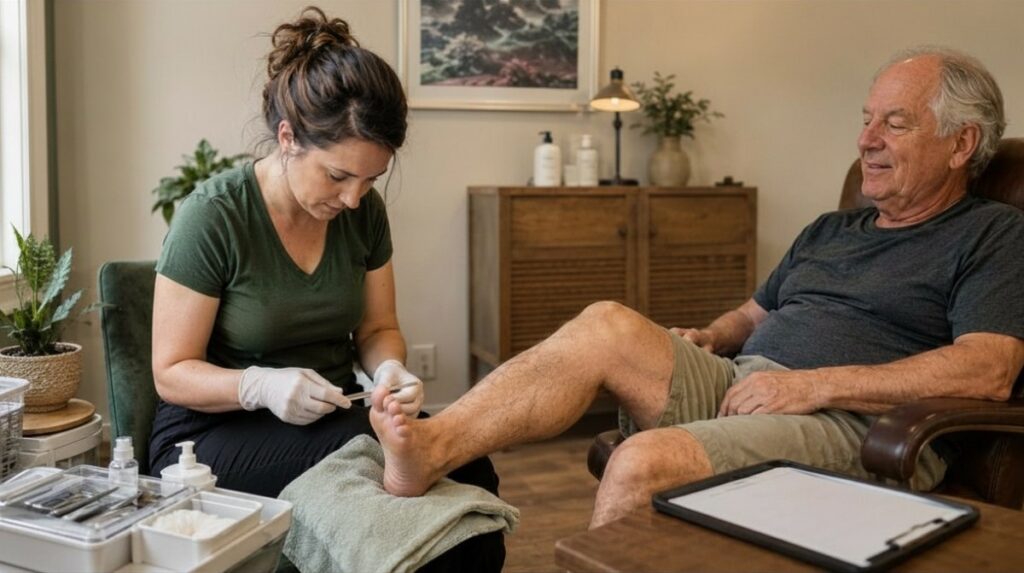
A nail career does not have to revolve around crowded appointment books, rushed services, and constant price competition. Some professionals eventually look for a quieter, more deliberate way to use their skills—one built around detailed consultations, careful sanitation, and clients who need extra attention during routine nail care.
That need is becoming increasingly visible. The Centers for Disease Control and Prevention estimates that 40.1 million people in the United States had diagnosed or undiagnosed diabetes in 2023. Diabetes may contribute to reduced feeling, limited blood flow, slower healing, and a higher risk of serious foot complications. Older adults and people with other chronic conditions may also need nail services approached with greater caution.
This is where advanced, safety-centered nail education enters the conversation. Understanding what is a medical nail technician can help you decide whether this private specialization fits your goals, your state license, and the type of clients you hope to serve.
The Essentials at a Glance
- Advanced Beauty Education: A Medical Nail Technician, often shortened to MNT, is generally a licensed nail technician or cosmetologist who has completed additional private education related to infection prevention, client screening, chronic-condition awareness, documentation, and medical referral.
- No Additional Medical Authority: An MNT certificate is not a government-issued healthcare license. It does not authorize diagnosis, wound care, medical treatment, surgery, or services outside the technician's original state beauty license.
- Provider Requirements Differ: Medical Nail Technician is not a nationally standardized license. Private education providers may use different prerequisites, course names, examinations, internship rules, and certificate requirements.
- Specialization May Support Business Growth: Additional education may help a technician develop a more focused service experience and build professional relationships. It does not guarantee referrals, premium pricing, employment, or a particular income.
- State Law Remains the Final Authority: Every service must remain within the scope, sanitation standards, facility rules, and licensing laws of the state where it is physically performed.
Where Medical Nail Care Fits in the Beauty Industry
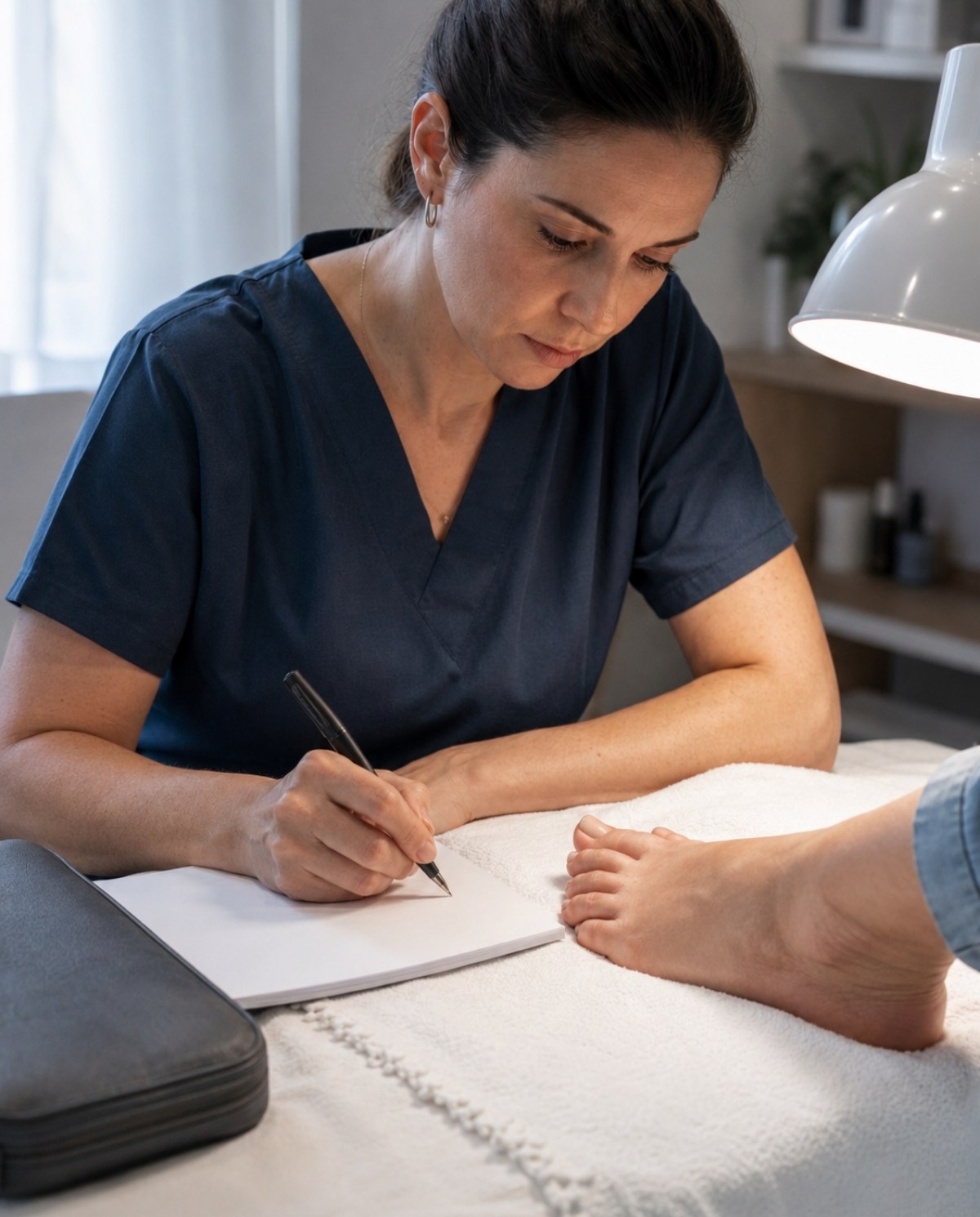
A standard nail appointment may concentrate mainly on appearance, relaxation, and efficient service. A safety-focused appointment usually places more emphasis on consultation, visible risk screening, recordkeeping, infection prevention, conservative techniques, and knowing when not to proceed.
The Medical Nail Technician title is commonly used for a beauty professional who has pursued private advanced education related to elderly clients, people with diabetes, and individuals whose health conditions may complicate routine nail care. The word “medical” describes the training focus or work environment. It does not make the technician a doctor, nurse, podiatrist, or other healthcare provider unless that person separately holds an applicable healthcare license.
Several principles commonly shape this type of work:
- Aseptic Work Habits: The Centers for Disease Control and Prevention defines asepsis as preventing contact with microorganisms. In nail services, an aseptic approach may involve hand hygiene, preparing a clean workstation, separating clean and contaminated items, using disposable supplies when appropriate, and cleaning and disinfecting reusable tools according to state rules and product labels. Asepsis, cleaning, disinfection, and sterilization are related but different processes.
- Waterless Service Options: Some advanced providers use dry or waterless techniques to remove the footbath as a possible source of contamination and reduce prolonged soaking. Balance Health identifies waterless treatment as a feature commonly associated with medical pedicures. The National Institute of Diabetes and Digestive and Kidney Diseases also advises people with diabetes not to soak their feet because soaking can make the skin too dry. Waterless care does not eliminate every possibility of cross-contamination, and it is not a nationwide legal requirement.
- Conservative Cosmetic Maintenance: A technician may provide careful nail and surrounding-skin maintenance only when the client's condition and state scope allow it. Painful, infected, severely distorted, deeply ingrown, bleeding, or otherwise abnormal areas may need evaluation by a qualified healthcare provider before any cosmetic service is considered.
- Visible Screening Without Diagnosis: Advanced education can help a technician notice conditions that may make a service inappropriate. The technician can record visible observations, decline or modify the appointment, and recommend medical evaluation. The technician cannot determine that a client has neuropathy, vascular disease, fungus, cancer, or another medical diagnosis.
- Careful Product Decisions: Product selection becomes especially important when a client has reduced sensation, fragile skin, poor circulation, or a history of foot complications. NIDDK specifically advises people with diabetes not to cut corns and calluses or use medicated corn plasters and liquid corn or callus removers because these methods can damage the skin and contribute to infection. Products must also be used according to their labels and within the technician's legal scope.
The safest way to understand this specialization is to focus on judgment rather than treatment. An MNT does not replace a podiatrist. The technician's value comes from recognizing risk, maintaining strong sanitation procedures, avoiding inappropriate services, and referring clients when cosmetic care is no longer suitable.
For a closer look at how these principles apply in an ordinary nail environment, our guide to nail salon hygiene and professional aftercare explains practical ways technicians can reduce cross-contamination and protect both clients and service providers.
The wider foot-care field also shows why routine maintenance receives significant attention. Mordor Intelligence estimates the global podiatry services market at $4.87 billion in 2026 and reports that routine foot care represented 46.87% of the market in 2025. These figures relate to the broader podiatry industry, not specifically to MNT jobs or salaries.
Some medical practices may employ safety-trained nail professionals or refer suitable clients to them. Whether that arrangement is possible depends on state law, the healthcare provider's policies, the technician's qualifications, insurance and facility requirements, and the exact services being performed. Completing a private certificate does not create an automatic referral relationship.
Building the Qualifications Step by Step
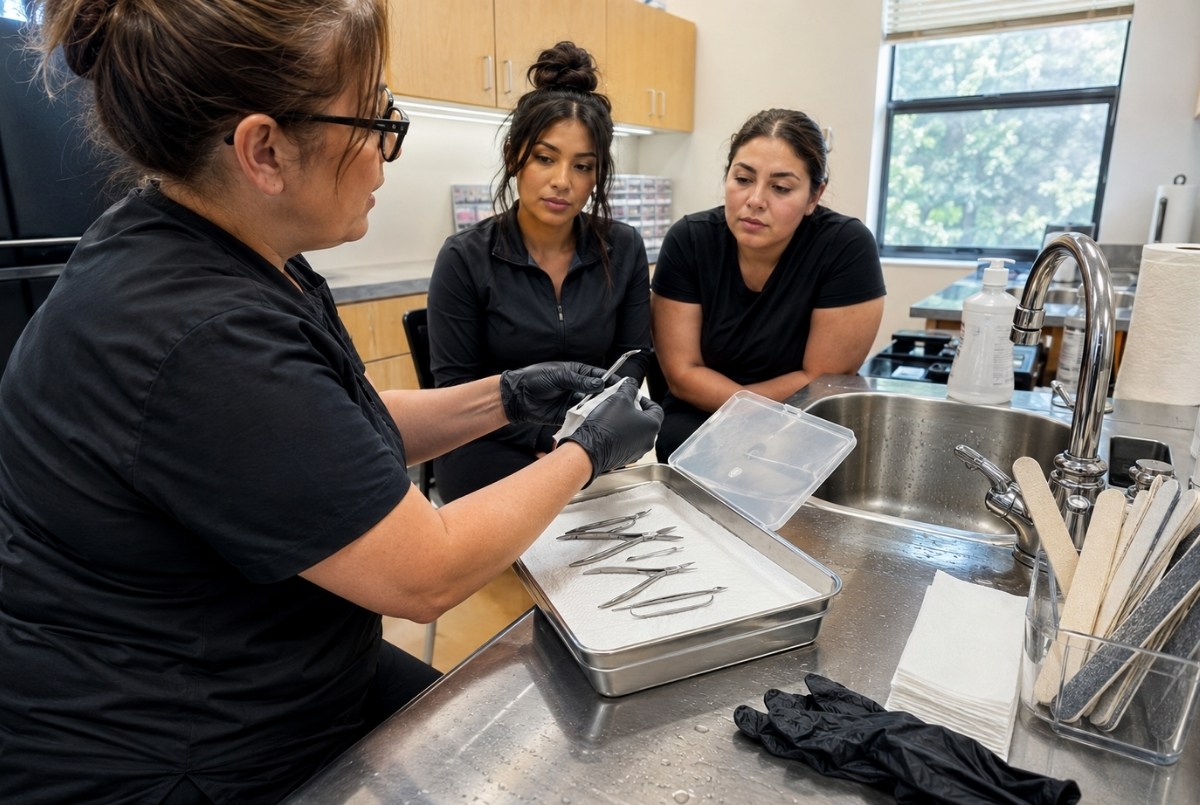
For most aspiring MNTs in the United States, the first stage is qualifying as a nail technician, manicurist, or cosmetologist under the laws of the state where they intend to work. This normally involves approved education, a licensing examination, and an active state-issued professional license.
Our guide explaining the difference between nail education certificates and state licensing requirements provides a broader introduction to this foundational process.
Training requirements are not identical nationwide. Under Missouri Revised Statute 329.040, a school-based manicurist course must contain at least 400 hours. The statute also requires students to complete a minimum amount of classroom preparation before performing manicurist services on school patrons.
For comparison, the Georgia State Board of Cosmetology and Barbers requires a 525-hour nail-care curriculum, while the Arkansas Department of Health requires 600 hours of manicure education. These differences are one reason prospective students must check the rules in the state where they plan to become licensed.
At Neosho Beauty and Barber College, the Nail Technician program is listed as a 400-hour program. The school describes instruction in manicuring principles, nail and hand care, professional products, student salon services, practical projects, weekly assignments, licensing-exam preparation, and workplace readiness.
Completing foundational education and receiving a state license does not automatically make someone a Medical Nail Technician. MNT is a separate private credential, and the requirements depend on the organization issuing it.
One frequently referenced pathway comes from Nailcare Academy. Within that provider's system, the complete pathway includes:
- Advanced Nail Technician, or ANT, education
- Wellness Nail Technician, or WNT, education
- An MNT internship preparation program
- A documented 40-hour internship with a foot-care medical provider
In Nailcare Academy's system, ANT and WNT education must be completed before the MNT internship process. The provider receives documentation from the internship before issuing its MNT certificate. This sequence belongs to Nailcare Academy and should not be treated as a government-mandated national curriculum.
Other education companies may structure their programs differently. Before enrolling, examine:
- The provider's eligibility and licensing requirements
- Course topics and instructor qualifications
- How infection prevention and legal scope are addressed
- Whether practical skills are evaluated
- Any internship or medical-office requirements
- The assessment and certificate-completion process
- Refund, retake, renewal, and continuing-education policies
- Whether the techniques taught are permitted in your state
A professional-looking certificate is not enough by itself. The program should make clear what the credential represents, what it does not authorize, and how students are expected to remain within their beauty licenses.
How Online Study Fits Into the Process
Some parts of advanced nail education can be completed through online study. Subjects such as anatomy, infection prevention, terminology, documentation, chronic-condition awareness, client communication, and referral procedures can be introduced through digital coursework.
Nailcare Academy offers its ANT and WNT education online. Its full MNT pathway also includes internship preparation and a documented 40-hour internship with a foot-care medical provider. Therefore, taking theory classes online is not the same as completing the entire MNT process through online lessons alone.
Requirements are not universal because MNT is privately administered rather than nationally regulated. Anyone researching a medical nail technician online program should confirm:
- Which portions are completed online
- Whether the provider requires an active nail or cosmetology license
- How examinations and practical competency are evaluated
- Whether an internship is mandatory
- Who is permitted to supervise the internship
- How internship hours are documented and approved
Supervised exposure inside a medical setting may help a technician understand office procedures, professional communication, documentation expectations, and what clients experience after being referred for medical evaluation. It does not authorize the intern to diagnose conditions or perform medical procedures.
The Legal Line Between Cosmetic and Medical Care
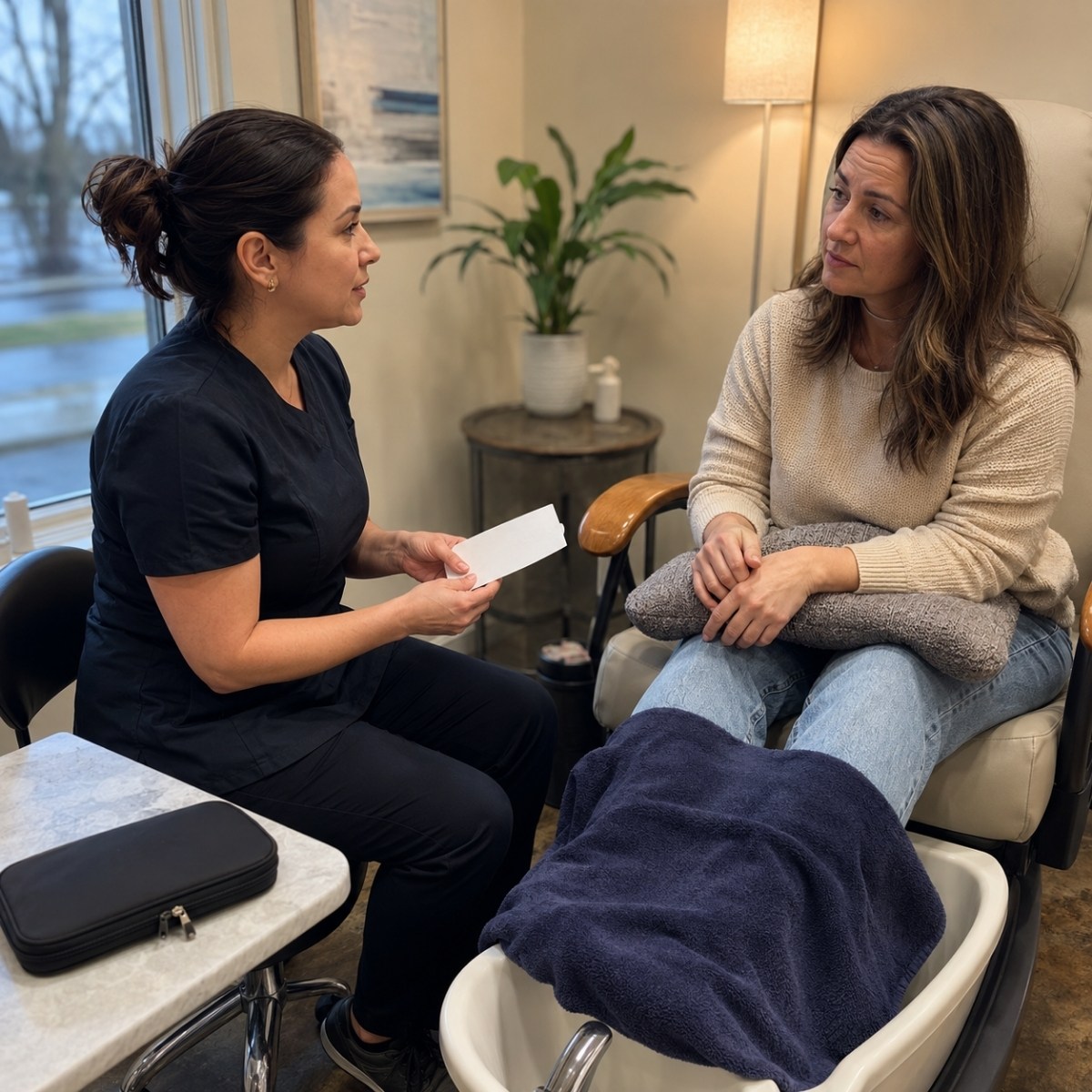
An advanced certificate adds education, not legal authority. Your state-issued license determines which services you may perform, and those boundaries remain in effect whether you work in a salon, private suite, mobile setting, senior community, or podiatry office.
Nailcare Academy makes this distinction in its explanation of ANT, WNT, and MNT scope of practice. According to the provider, an advanced certificate does not change the technician's original legal scope. A technician working inside a medical office continues to have the same service boundaries that apply in a salon.
Missouri law defines the Class MO manicurist scope around cosmetic services such as cutting, trimming, polishing, coloring, cleaning, and beautifying fingernails and toenails; applying artificial nails; and cleaning or massaging the hands, arms, legs, and feet. That definition does not transform a manicurist license into permission to diagnose disease, treat wounds, or practice podiatry.
States may describe their restrictions differently. For example, Georgia's facility and sanitation rules limit cosmetology services to intact, healthy skin and nails. A technician must therefore review the actual statutes and board rules that apply where the service is provided instead of relying on a private course description.
Advanced training can improve your ability to determine when a cosmetic service may need to be changed, postponed, or refused. Visible concerns that may justify stopping the appointment and recommending medical evaluation include:
- Open cuts, sores, ulcers, or active bleeding
- Blisters, drainage, or possible infection
- Unusual redness, warmth, swelling, or inflammation
- Severe pain or an unexplained sudden change in the foot or nail
- An ingrown nail that has entered or broken the surrounding skin
- Thick, yellowed, curved, or severely distorted nails in a client with diabetes or reduced sensation
- A client who cannot safely see, feel, or reach their feet
The National Institute of Diabetes and Digestive and Kidney Diseases recommends that people with diabetes have a foot doctor trim their nails when they cannot see, feel, or reach their feet, when their nails are thick or yellowed, or when the nails curve and grow into the skin. It also identifies cuts, sores, swelling, blisters, warm areas, and ingrown nails as concerns that require attention.
A technician should describe only what is visible. For example, it is appropriate to record redness, swelling, discoloration, drainage, or a break in the skin. It is not appropriate to label the condition as fungus, cellulitis, neuropathy, vascular disease, or another diagnosis.
Private certification also does not remove professional responsibility. Technicians still need to:
- Follow state licensing and sanitation requirements
- Use products and equipment according to instructions
- Keep documentation appropriate to the service and work setting
- Obtain relevant client information without presenting themselves as medical providers
- Decline services that exceed their competence or legal scope
- Consider professional liability coverage appropriate to their services and business arrangements
Insurance may be required by a landlord, employer, medical practice, contract, or particular jurisdiction, but there is no single nationwide rule requiring every nail technician to carry the same policy. Coverage should be evaluated according to the technician's location, services, employment arrangement, and insurer requirements.
Income, Employment, and Business Potential
Additional education may help a technician create a service model that emphasizes careful consultations, longer appointment times, strong sanitation, documentation, and a calm environment. That can differentiate the business from a high-volume walk-in salon, but there is no authoritative national salary category specifically for Medical Nail Technicians.
The U.S. Bureau of Labor Statistics tracks these professionals within the broader manicurist and pedicurist occupation. The median wage was $16.66 per hour in May 2024. Employment is projected to increase 7% from 2024 through 2034, with approximately 24,800 openings projected each year on average.
These figures describe the overall occupation rather than MNT-certified technicians. Federal occupational wage estimates also do not include self-employed workers, which limits their usefulness for people planning private suites, mobile services, or independent businesses.
Actual financial results may depend on:
- Demand and competition in the local market
- The services permitted under state law
- Whether the technician is an employee, renter, contractor, or owner
- Appointment duration and realistic weekly capacity
- Pricing and client retention
- Professional referral relationships
- Experience, reputation, and booking consistency
- Rent, supplies, equipment, insurance, licenses, taxes, and processing fees
- Time spent on cleaning, records, marketing, scheduling, and other unpaid work
A specialized technician may choose fewer appointments with more time devoted to screening, sanitation, and individualized attention. Some clients may value that experience, but advanced education does not automatically justify a particular price or guarantee that clients will accept it.
It is also important to separate gross revenue from personal income. A business can collect significant service revenue while still carrying substantial operating costs. Reliable planning requires estimating expenses, unpaid administrative work, cancellations, taxes, and realistic booking levels before calculating take-home pay.
The practical advantage of specialization is choice. It may give a technician another way to structure services, develop a clear professional identity, and serve a defined client group without relying entirely on speed or discount pricing.
Start with a Strong Nail Technology Foundation
Before exploring advanced private certificates, future specialists need a reliable foundation in nail structure, product use, sanitation, client communication, practical procedures, and licensing preparation.
Neosho Beauty and Barber College offers a 400-hour Nail Technician program aligned with Missouri's school-hour requirement for manicurist training. Students receive instruction in manicuring principles, nail and hand care, professional products, practical projects, student salon services, client relations, and preparation for the licensing examination and workplace.
The program provides foundational nail education. Medical Nail Technician certification is a separate private specialization and is not identified as part of Neosho's 400-hour Nail Technician curriculum. Graduates who become properly licensed may later investigate advanced providers, compare their requirements, and confirm that the techniques taught remain legal in Missouri or any other state where they plan to work.
To review admission information, campus-tour steps, application procedures, and enrollment requirements, visit the Neosho Beauty and Barber College Enrollment page. You can also use the school's contact form to ask about the Nail Technician program and preparing for Missouri licensure.
Common Questions About Medical Nail Technician Careers
Does an MNT certificate make someone a healthcare professional?
No. An MNT is generally a state-licensed nail technician or cosmetologist who has completed additional private education. The certificate does not create a medical license or authorize the person to diagnose conditions, prescribe medication, provide wound care, or perform medical treatment.
Can an MNT bill nail services to health insurance?
Private cosmetic services performed independently by a nail technician are generally paid directly by the client rather than billed as medical treatment. This does not mean that health insurance never covers foot care.
According to Medicare, routine services such as trimming nails, removing corns or calluses, and preventive foot maintenance are usually not covered. Medically necessary treatment and limited routine foot care may be covered in qualifying circumstances when the service meets Medicare's conditions and is furnished by an eligible doctor, healthcare provider, or practice. Clients should verify coverage with the medical practice and their insurance plan.
How is an Advanced Nail Technician different from a Medical Nail Technician?
The answer depends on the private education provider. In Nailcare Academy's system, the ANT program focuses on enhanced salon safety, infection prevention, and professional practices. Students then complete Wellness Nail Technician education, an MNT internship preparation program, and a documented 40-hour internship with a foot-care medical provider.
That sequence is specific to Nailcare Academy. Other certificate providers may define ANT, WNT, or MNT differently.
Can an MNT treat fungus, infected ingrown nails, or diabetic foot ulcers?
No private MNT certificate authorizes diagnosis or treatment of these medical conditions. The technician may notice visible warning signs, postpone or refuse the cosmetic service, document observations, and recommend evaluation by a qualified healthcare provider.
Whether any cosmetic service can be performed later depends on the client's condition, the advice of the healthcare provider when applicable, and the technician's state scope of practice.
Can I transfer my nail license when I move to another state?
A private advanced certificate does not give you automatic practice rights in another state. You must satisfy the destination state's licensing, endorsement, reciprocity, education, examination, and application requirements before performing regulated services there.
The Cosmetology Licensure Compact is being developed to support interstate practice, but the official website currently states that the compact is not yet active and multistate licenses are not available. The compact is also structured around qualifying cosmetologists who hold active, unencumbered cosmetology licenses in participating home states. It should not be assumed to cover every separately licensed manicurist or nail technician.
Until multistate licensing becomes operational and your specific license is confirmed as eligible, you must continue using each state's existing licensing or endorsement process.