

Cosmetology Exam Prep Guide: Written Questions, Practical Skills, and Smart Study Tips
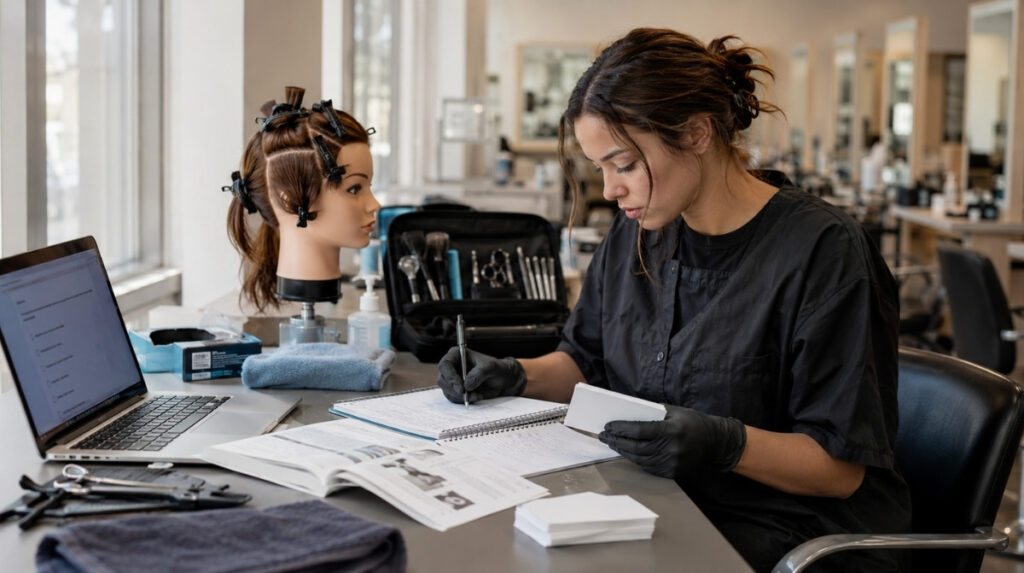
Stepping away from the familiar beauty school clinic floor and into an official testing environment can make even skilled students feel nervous. The pace changes, the rules feel stricter, and suddenly your knowledge has to show up through timed questions, sanitation steps, organized supplies, and calm decision-making. This guide helps make that process feel less confusing by breaking the cosmetology state board exam into clear, manageable parts so you can prepare with more confidence.
Key Points Before You Test
- The Written Portion Can Be Tough: Published state data shows that the written exam can be the bigger obstacle for many candidates. For example, the Texas Department of Licensing and Regulation reported a much lower FY2025 Operator Written pass rate than its practical pass rate.
- Safety Matters More Than Flashy Styling: Practical exam scoring focuses heavily on infection control, client protection, disinfection habits, clean organization, and the ability to follow directions rather than trendy finished looks.
- Product Labels Are Not Universal: Some states require original or photocopied manufacturer labels for disinfectants and hand sanitizers, while rules for simulated products can be different depending on the official exam packet.
- Online Accounts Are Part of the Process Now: Many boards and testing vendors use digital portals, eligibility notices, online applications, and electronic scheduling, but candidates still need to follow the current Candidate Information Bulletin or Test Taker Guide for their own state.
Before You Choose an Exam Date

The first step toward a smoother testing experience is understanding how your state handles eligibility, applications, and scheduling. In many states, the process starts after your beauty school reports your completed training hours to the state board or assigned testing vendor. Once your eligibility is reviewed, you may receive an approval notice or instructions explaining how to create an online account, pay fees, and schedule your exam through the system your state uses.
Testing costs also need to be checked early because fees are not the same everywhere. Many states charge separate fees for the theory and practical portions. For instance, the official Georgia PSI Test Taker Guide lists a $45 theory exam fee and a $64 practical exam fee for cosmetology. Meanwhile, the Arkansas Department of Health fee schedule lists practitioner testing costs at $60 for the written portion and $65 for the practical test.
Because state rules control training hours, exam structure, fees, score validity, renewal deadlines, and transfer requirements, it helps to review a broader licensing breakdown before you schedule. For more context on how these rules can change from state to state, you can read our guide on cosmetology license renewal, exams, and transfer rules by state.
Old forms and outdated school handouts can also create problems because testing systems are becoming more digital. As detailed by the Maryland Board of Cosmetologists, PSI no longer processes Maryland applications by mail, fax, or email as of March 31, 2025, and candidates must submit the application online. That specific rule applies to Maryland, but it shows why candidates should not assume last year’s instructions still apply.
Testing agencies update candidate materials regularly. A practical kit rule, label requirement, dress code, retake policy, or online scheduling step can change from one testing cycle to the next. Before buying supplies or selecting a test date, download the newest Candidate Information Bulletin, Test Taker Guide, or state board notice from the official board or testing vendor.
Why Theory Prep Needs Real Attention
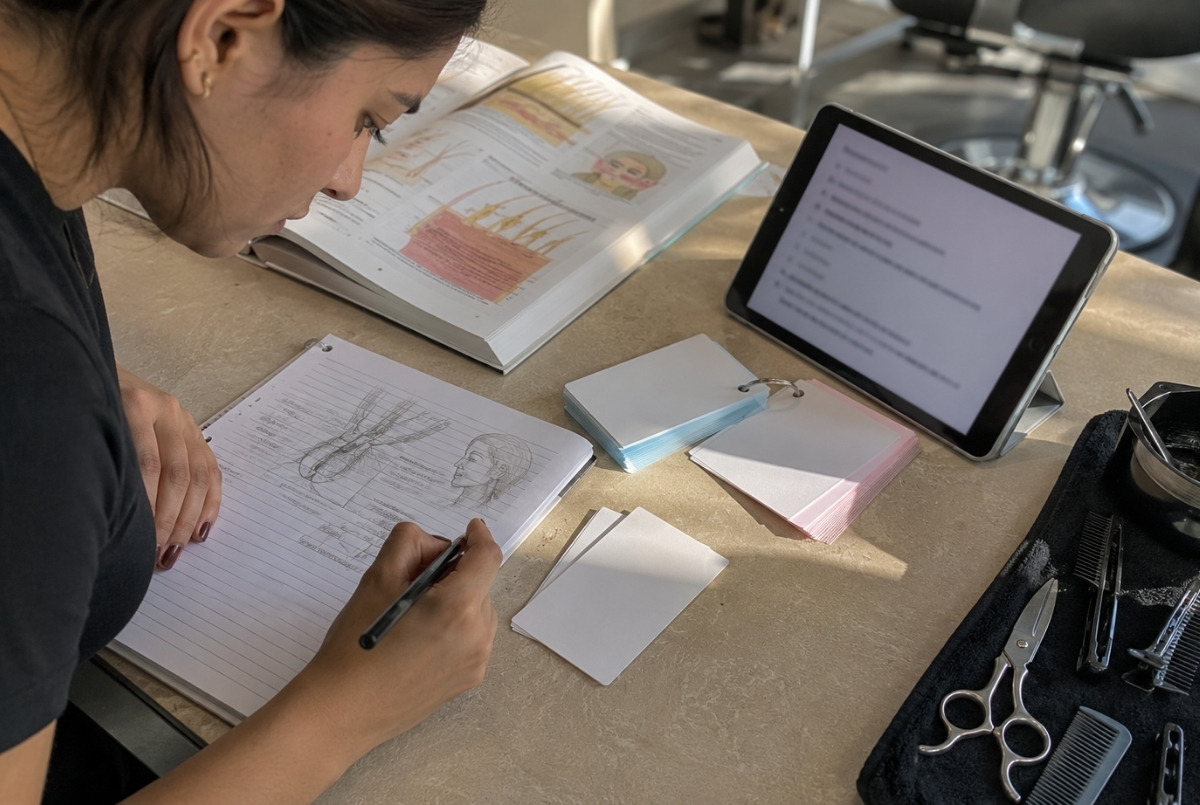
Many students naturally worry most about the hands-on portion, but the written exam deserves serious preparation. This part of the test checks your understanding of science, sanitation, safety, infection control, chemicals, state law, and professional judgment. It does not measure how creative your styling is.
A large part of your study time should go toward consumer health and protection. You may see questions about sanitation, disinfection, hair and skin structure, chemical services, nail care, contraindications, and when a service falls outside the cosmetology license. These questions are designed to test whether you understand how to protect clients, not just whether you remember beauty terms.
Your local scope of practice also matters. Scope of practice means the services you are legally allowed to perform under your license. If a test question asks whether a cosmetologist can perform deep tissue medical massage, advanced skin procedures, tattooing, or permanent cosmetic services, you need to know where your state sets the legal boundary.
State rules and product-safety updates also keep changing. For example, the Arkansas Department of Health posted a notice stating that any hair relaxer product sold in Arkansas that contains a carcinogen or reproductive toxicant must follow the warning-label requirements of Act 964 of 2025. That does not mean the exact notice will appear on your test, but it does show why chemical safety, consumer protection, and state law are active parts of cosmetology licensing.
The pass-rate data makes the point even clearer. The Texas Department of Licensing and Regulation exam records show that the FY2025 Operator Written pass rate was 49.05%, while the Operator Practical pass rate was 89.10%. That does not prove every state follows the same pattern, but it does show why salon-floor experience alone is not enough. You need focused theory study.
Smarter Ways to Practice for the Written Test
Because the theory exam relies on memory, reading accuracy, and applied safety knowledge, the way you study matters. Reading a huge textbook from front to back and highlighting random paragraphs may feel productive, but it is not always the best method for hands-on learners. You need practice that forces your brain to retrieve information before exam day.
A digital cosmetology practice test can help you get used to how exam questions are phrased. A strong cosmetology written exam study guide should divide the material into smaller sections covering infection control, hair care, chemical services, skin care, nail care, state law, and client safety.
Free prep tools can also be useful when used correctly. A free practice test for the cosmetology state board lets you check your current knowledge without adding more pressure to your school budget. When reviewing cosmetology exam questions and answers, do not only memorize the correct option. Pay attention to why the other options are wrong, because that is where you often learn how test writers think.
Keep a simple list of the topics you keep missing. If you are repeatedly getting questions wrong about chemical relaxing, infection control, anatomy, skin conditions, nail disorders, or cosmetology state law questions, those are the areas that need extra review during your final week. A focused cosmetology theory practice test or targeted cosmetology exam practice session can help turn weak areas into stronger ones.
What Happens When You Arrive to Test
A lot of exam anxiety comes from not knowing what to expect. While the exact check-in process can vary by testing vendor and state, most professional testing centers follow a structured routine.
On test day, arrive at least thirty minutes early unless your own bulletin gives different instructions. Testing staff will usually verify your identification, confirm your registration, and make sure you are approved to test. Security is strict because the testing agency has to protect exam integrity. You may be required to store personal belongings such as your phone, watch, bag, notes, and other restricted items in a secure area before entering the testing room.
After check-in, an administrator or proctor will guide you to the testing area. If you are taking the theory portion at a physical center, the exam is usually computer-based and timed, so you need to pace yourself. The number of questions and time limit depend on your state, license type, and testing vendor.
Some candidates may also see remote testing options, but you should not assume they are available everywhere. The PSI Cosmetology and Barber National Exams page notes that remote theory testing and virtual practical testing are available for certain participating states. This is why the phrase cosmetology online test can mean very different things depending on where you live. Always check the current bulletin for your exact license type and location before assuming the exam can be taken from home.
Packing Your Practical Kit Without Guesswork
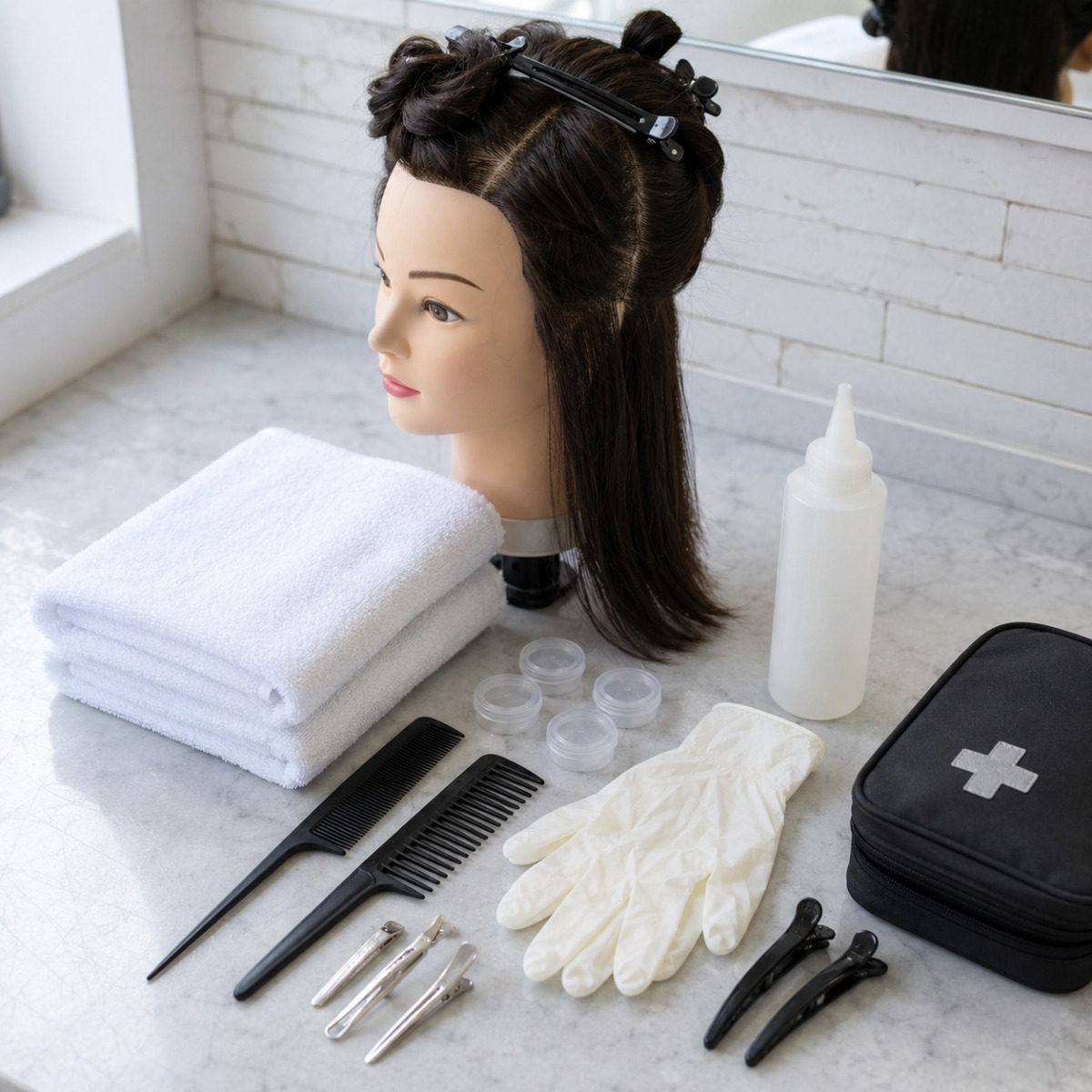
The practical exam is where your hands-on training becomes visible, but the goal is not to create a dramatic salon transformation. Evaluators are watching for safe habits, infection control, clean transitions, organized setup, proper client protection, and your ability to follow instructions under pressure.
Your cosmetology kit for the state board must be packed according to the official rules for your state. There is no single kit list that works everywhere. You should use your state’s cosmetology kit list, Candidate Information Bulletin, Test Taker Guide, or practical testing packet as the final authority. For example, the Georgia PSI Test Taker Guide explains that PSI National Practical Tests do not use one standardized supply list, so candidates must bring the professional equipment, products, and containers needed to perform the required topic areas while following the listed rules.
Dress rules also vary by state. For Georgia PSI testing, candidates must arrive in neat, clean, professional attire, wear a sleeved smock or lab coat, and wear closed-toe shoes. The current Georgia guide does not require all-black clothing, so do not rely on older blog posts or advice from someone who tested under a different rule set.
Blood exposure or injury procedures are another important part of practical preparation. If an injury occurs during the test, or if your exam requires a blood exposure demonstration, you must follow the exact process in the official packet. The Ohio State Cosmetology and Barber Board practical testing packet, for example, gives specific blood exposure instructions involving antiseptic, wound covering, gloves or finger guards, disposal of soiled materials, and infection-control steps.
Organizing your kit before exam day can save you from wasting valuable time during transitions. If you drop a comb, clip, or implement during a practical exam, you should treat it as contaminated, avoid reusing it, sanitize your hands as instructed, and use a clean replacement from your kit. Practicing directly from the packed kit helps your hands learn where everything is before the pressure of test day.
Labeling is one of the easiest areas to overlook. According to the Ohio practical testing directives, disinfectants and hand sanitizers must have original or photocopied manufacturer labels, and handwritten or typed labels are not acceptable for those products. Georgia’s PSI guide allows self-created or actual labels for certain simulated products, but it requires manufacturer labels for disinfectants and other products that must meet safety-data requirements. The safest rule is to follow your exact state bulletin, label everything early, and avoid last-minute improvising.
Where Licensure Can Take Your Beauty Career
When studying starts to feel stressful, it helps to remember what the exam is actually leading toward. Passing the state board is not just about earning a piece of paper. It is the step that allows you to move from student practice into licensed professional work.
The beauty field is no longer limited to one traditional salon-chair path. Licensed professionals may build careers in salons, spas, independent studios, education, bridal and event styling, film and production work, beauty retail leadership, product support, brand training, or online beauty-related roles. The habits you build while preparing for licensure can shape how confidently you enter those opportunities.
Once you are licensed, it helps to understand the larger career landscape. You can read more about the 10 careers you can pursue with a cosmetology license, including remote options, which may include salon styling, platform education, film and event styling, beauty retail leadership, brand support, and independent studio ownership depending on your location, state rules, and additional training. If you plan to move or expand your options later, it is also smart to review the cosmetology license renewal, exams, and transfer rules by state so you understand how credentials may need to be maintained.
The labor-market numbers also show why beauty remains an active field. The U.S. Bureau of Labor Statistics projects overall employment of barbers, hairstylists, and cosmetologists to grow 5% from 2024 to 2034, with about 84,200 openings projected each year on average. Related specialized fields also show continued demand: BLS projects skincare specialists to grow 7% from 2024 to 2034, with about 14,500 openings per year, and manicurists and pedicurists to grow 7%, with about 24,800 openings per year.
Modern beauty professionals also need to understand how clients discover and evaluate services and products. McKinsey & Company’s State of Beauty analysis notes that beauty discovery and purchasing are shifting through e-commerce, social commerce, digital marketplaces, and fast-moving platforms such as TikTok Shop. In a separate wellness-market analysis, McKinsey also reported that many U.S. and U.K. consumers now prioritize clinical effectiveness over clean or natural claims when evaluating wellness products. For future beauty professionals, that means product knowledge, consumer education, safety awareness, and trust-building are becoming more valuable.
This is why strong training matters before and after the exam. Passing the state board is the baseline requirement, but the habits you build in school can influence your confidence, service quality, professional reputation, and long-term income potential.
If you are planning how to pay for your training, you can review our cosmetology school financial aid guide covering FAFSA, grants, 529 plans, and payment options. A good education should help you prepare for the exam while also giving you the practical foundation to grow in a competitive beauty market.
Build Your Beauty Future at Neosho Beauty and Barber College
Passing the exam is a major milestone, but building a career takes more than test preparation. You need an environment that helps you develop technical skill, professional habits, and the confidence to work with real clients.
At Neosho Beauty and Barber College, we bring over forty years of beauty education experience to students preparing for today’s industry. Our programs are built to help students develop the practical skills, technical knowledge, and professional confidence needed to become Salon Ready graduates.
Through structured training, real salon-floor practice, and guidance from a dedicated team, you can prepare for licensure while building the habits needed for your next step in beauty. If you are ready to take control of your future, visit our Enrollment section to learn more. You can also use the contact form at the bottom of this page to connect with an admissions representative, ask questions, or set up a campus tour.
Frequently Asked Questions
Can the cosmetology state board be taken from home?
It depends on your state, license type, and testing vendor. Some exams still require candidates to report to an approved testing center, especially practical exams that require direct observation. However, some PSI-administered cosmetology programs offer remote theory testing or virtual practical testing for certain participating states, as shown on the PSI Cosmetology and Barber National Exams page. Always check your current state Candidate Information Bulletin before assuming your test must be in person or can be completed from home.
What should you do if you fail one part of the cosmetology exam?
If you do not pass on your first attempt, do not treat it as the end of your career. Retake rules vary by state, but many systems allow candidates to retake the failed portion after paying the required fee and following the board’s waiting-period or scheduling rules. For example, the Maryland Board of Cosmetologists says candidates who fail may retest on an unlimited basis, while Kentucky Senate Bill 22 allows cosmetology board license applicants to retake a failed portion an unlimited number of times, with each retake at least one month after receiving actual notice of the failure.
Is there a required waiting period before a retest?
The waiting period depends on the state and testing agency. Kentucky’s SB 22 sets a one-month wait after notice of failure for retaking a failed portion, while other states may base retesting on application deadlines, available exam dates, or vendor scheduling rules. The safest step is to check the current bulletin from your state board or testing provider as soon as you receive your score report.
Can cosmetology exam scores expire?
Yes, exam scores or eligibility windows can expire, but the timeline depends on the state. Maryland says testing scores must be passed successfully within two years of each other to be considered valid by the Board. Georgia’s PSI Test Taker Guide states that courses completed after July 1, 2018 are valid for four years, and if no passing score is achieved within that four-year period, the candidate must reapply with the Georgia Board. Because these timelines can affect your license application, it is best to complete the licensing steps as soon as possible after passing.
2 thoughts on “Cosmetology Exam Prep Guide: Written Questions, Practical Skills, and Smart Study Tips”